


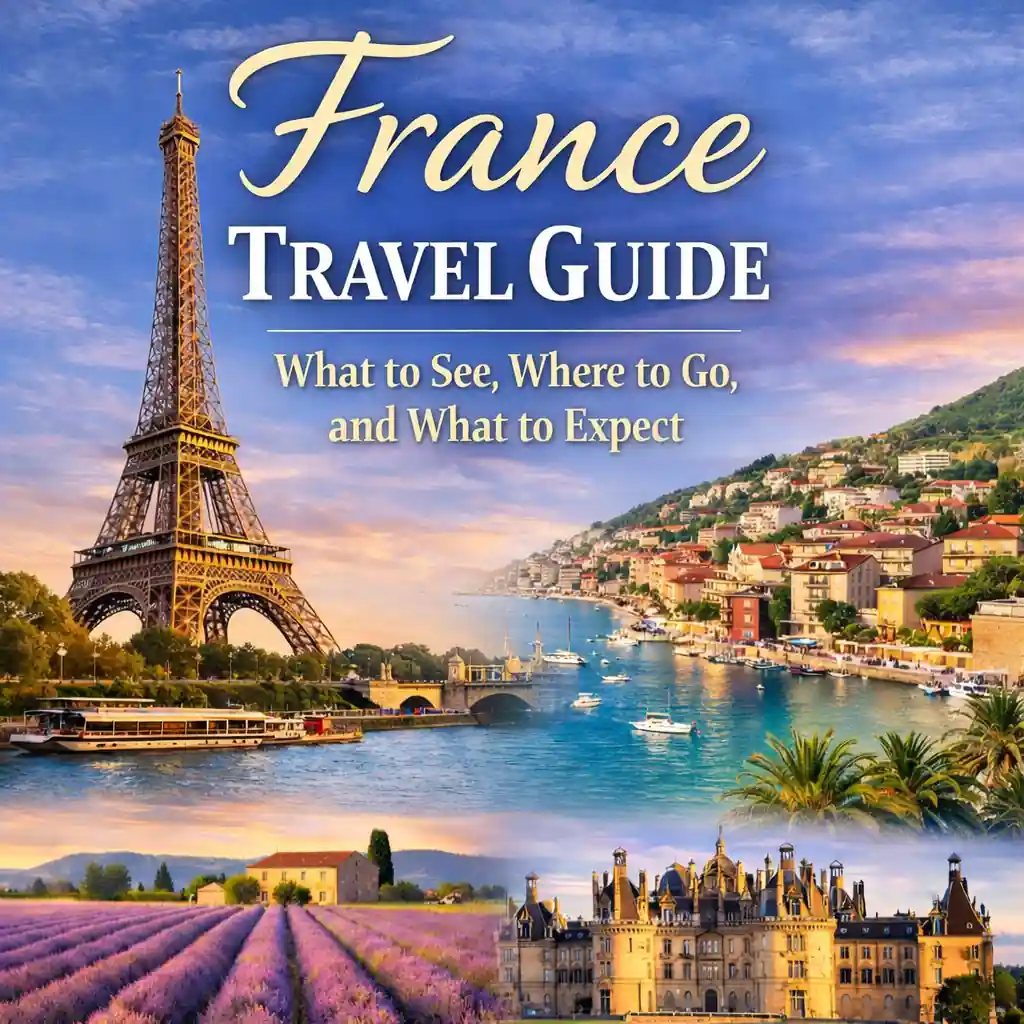
France travel planning looks easy in the beginning, but it rarely stays that way for long. You tell yourself this trip will be simple: Paris, maybe the south of France, a few pretty towns, good food, nice photos, done. Then you actually start building the itinerary and everything changes. Suddenly you are comparing Paris, Lyon, Nice, Strasbourg, Bordeaux, Annecy, Provence, the Loire Valley and even small French villages you had never heard about before. That is exactly what happened to me. I opened my laptop thinking I would plan my France trip in twenty minutes and not long after that I had fifteen tabs open and a notebook full of messy ideas. If you are looking for a real France travel guide on what to see, where to go and what to expect, that confusion is honestly part of the experience.
That is probably the first thing to expect from France. It is not one neat kind of trip. It is a country that keeps changing mood. One part feels polished and grand, another feels slow and rural, another feels beachy and bright, another feels old and storybook. So the trick is not trying to understand all of it before you go. The trick is picking the version of France that fits the kind of holiday you actually want.
For a first trip, I think that matters more than chasing the “best” places.
Start with Paris, but not only Paris
Yes, Paris is the obvious answer. And yes, it is still worth it. I know some people try to act unimpressed by Paris before they even arrive, like they are too experienced for it. I was a bit like that too, if I am honest. Then I got there and the city won anyway. Not every second, obviously. Some streets are crowded, some cafés are overpriced, some parts feel tiring after a while. But then evening comes, you walk by the river, the buildings start glowing a little, someone is sitting on a bridge with a drink, the air cools down and suddenly you remember why the city has that reputation.
Paris has enough for several trips on its own. Big sights, museums, old neighborhoods, gardens, shopping streets, little bakeries that make you stop even when you were not hungry. It is a strong starting point because it gives you that classic France feeling people imagine first.
Still, I would not make Paris the whole trip unless your time is very short. France opens up more once you leave the capital.
You may also Like:
If you want slower days, go south
This is where Provence usually enters the conversation and for good reason. Provence feels softer. The light looks different there. Mornings feel slower. Small towns have that relaxed look where even walking to buy coffee somehow becomes part of the holiday. I think this region works best for people who are tired and want the trip to feel like a real break, not just sightseeing with luggage.
The south in general has that effect. Nice is a good choice if you want a mix of city and sea. It feels easy to settle into. You can walk along the waterfront, take day trips, eat late, move slowly and not feel like you are wasting time. Antibes is lovely too. Cannes looked nice, though personally I liked the easier feel of other coastal places more. That is the nice thing with France though, your favorite spot might not be the most famous one.
If your idea of a good holiday includes sunshine, sea views, open-air dinners, and less pressure, southern France makes a lot of sense.
If you like castles, vineyards, and quiet beauty
Not everyone wants beaches or big cities. Some people want roads through the countryside, old buildings, gardens, and places that feel calm without being dull. For that, the Loire Valley is hard to ignore. It has a very different energy from Paris or the coast. Less noise. Less rush. More of that “let us stay another hour” kind of feeling.
This area is good for travelers who enjoy the in-between moments. Not just the castles themselves, but the drives, the little towns, the lunch stops, the river views, the parts of the day that are not on postcards. I think France is especially good at that sort of travel. You go for one famous thing, then end up remembering the random roadside bakery or the village square more clearly.
Bordeaux also works well if you like wine country mixed with a proper city break. It has a cleaner, calmer feel than some bigger places. Lyon is another strong pick especially if food matters a lot to you. People talk about Paris food so much that Lyon sometimes gets pushed to the side, which is a bit unfair. Meals there can be one of the main reasons to go.
What to see depends on what kind of traveler you are
This is where people make planning harder than it needs to be. They search for the top places in France, then try to force themselves to care equally about all of them. That rarely works.
If you like famous landmarks, elegant streets, museums, and long walks in a city, Paris deserves a good part of your trip.
If you want village life, warm weather, markets, and scenic drives, Provence is probably more your speed.
If coast and sunshine matter most, Nice and nearby towns make sense.
If you love food, Lyon should be very high on the list.
If you want a slightly fairytale feel, Strasbourg has that.
If you like lakes and mountain views, Annecy can be the one that surprises you most.
That is what France is like. You are not really choosing the best place. You are choosing the mood.
You may also Like:
What daily life feels like there
This is maybe the part people ask about less but it shapes the trip a lot. France is not difficult, though it can feel a little stubborn at times. Some things run on their own rhythm. Some restaurants open at certain hours and that is that. Some smaller towns can feel very quiet in the middle of the day. Some service feels warm, some feels brisk, some feels like you are being politely tolerated. It varies. I kind of liked that, to be honest. It feels real. Not staged for visitors every second.
You will walk more than you think. That is one thing almost everyone says after a France trip. Wear decent shoes. Good-looking uncomfortable shoes are a mistake there. Streets are beautiful, yes, but beauty does not help tired feet.
Transport between major places is usually manageable especially if you use trains. For countryside areas, a car can make life easier. Still, I would not move hotels too often. France looks compact on a map, but constant moving eats into the fun. You lose time packing, checking out, getting to stations, finding the next place, settling in then starting again. Two or three bases for a normal trip feels much better than trying to sleep somewhere new every night.
What to expect from the food
People sometimes build French food up so much that they turn eating into homework. That is not necessary. Some of the nicest things I had were simple. A flaky pastry in the morning when the street was still quiet. Bread and cheese from a shop. A crêpe eaten while walking. A lunch that looked ordinary from outside and turned out excellent. France is very good at making small food moments feel memorable.
Of course, you can also go all in with special meals if that is your thing. Just not every day. I think the better approach is to mix it. One meal you planned, one you found by accident, one quick bakery stop, one lazy café break. That feels natural. More human, really. And somehow the trip tastes better that way.
Regional food matters too. Paris does not taste like Lyon. Lyon does not taste like Provence. The coast has its own thing. The country changes through the plate, which sounds dramatic, but it is true.
The small disappointments are normal
This is worth saying because people expect France to be flawless. It is not. Some attractions will feel overhyped. Some train rides will be boring. Some coffee will be average. Some streets will just be streets. That is fine. A trip becomes strange when you expect every hour to feel magical.
What usually happens instead is better. The big highlights are mixed with ordinary little moments, and those little moments are often what make the place feel real. Sitting in a square because your feet hurt. Looking for shade on a hot afternoon. Watching locals argue cheerfully at a market. Getting slightly lost and then finding a quiet lane that feels nicer than the main sight you were heading to.
That is very France, at least to me.
How many days feel right
For a first trip, seven to ten days is a good range. That gives enough time to enjoy Paris and still add one other region. With less than that, I would keep it simple and avoid trying to cover too much. With two weeks, you can go deeper but only if you keep the pace calm.
Honestly, France punishes greed a bit. The more you try to collect, the less you enjoy. Better to see fewer places properly.
Final thoughts
If I had to describe France in the most honest way, I would say this: it is a place that rewards attention. Not speed, not box-ticking, not trying too hard. Attention. Notice the street you almost skipped. The bakery that smells ridiculous. The town that was supposed to be a quick stop and became half your day. The evening when you were too tired to do anything major and ended up having the best time anyway.
So what should you see? Paris, probably. Maybe the south. Maybe a quieter region with castles or vineyards. Where should you go? Wherever matches your mood, not someone else’s list. What should you expect? Beauty, yes. Good food, definitely. A few crowded places, a few expensive moments, plenty of walking, and a lot of small scenes that stay with you longer than expected.
That is France. Not one perfect picture. More like a stack of good moments, some grand, some tiny, all mixed together.
You may also Like:
FAQs
Is France good for a first Europe trip?
Yes, very much. It gives a bit of everything, which helps if you are still figuring out what kind of traveler you are.
Is Paris enough for one holiday?
It can be, especially for a short trip. But adding one more region usually makes the experience feel fuller.
What part of France is best for a relaxed holiday?
Provence is a strong choice. Nice can work too if you want sea and slower city days together.
Is France expensive?
It can be, especially in major tourist areas. But the cost depends a lot on where you go and how you plan the trip.
Should I rent a car?
For big cities, not really. For countryside travel, villages, and scenic regions, it can be very useful.
What should I expect most from a France trip?
Lots of walking, very good food, different moods from region to region, and at least a few favorite moments you never planned at all.