



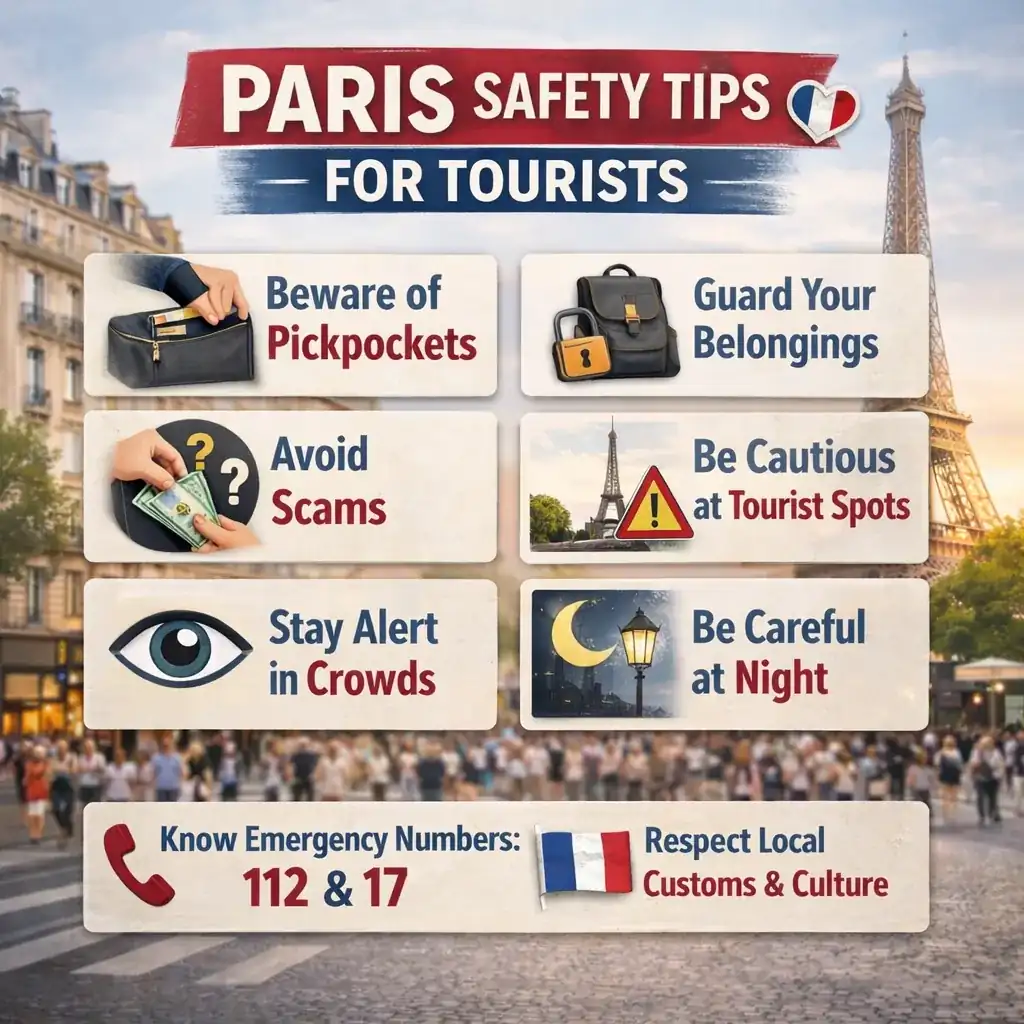
Paris is one of those cities people dream about for years. The lights, the cafes, the pretty streets, the old buildings, all of it feels cinematic when you first arrive. But like any big famous city, it also comes with a few headaches. I think that is the part many travel guides either exaggerate or totally skip. Some make Paris sound dangerous everywhere, which is not true. Others act like nothing can ever go wrong, which is not true either. The real answer sits in the middle.
Paris is usually fine for tourists if you stay aware and use basic common sense. That is really the heart of it. Most visitors have a lovely time and go home with great memories, too many photos and maybe a few extra pastries. Still, petty theft, tourist scams, crowded transport issues and late night mistakes do happen. So it helps to know the basics before you land there.
Small careless moments cause most problems
One thing I have noticed is that many travel problems start when people get relaxed too fast. Paris looks beautiful and romantic, so visitors let their guard down without even noticing. They put a phone on the café table. They leave a bag hanging loosely behind a chair. They pull out a wallet in a packed metro station and do not think twice. That is where trouble usually begins. Not in some dramatic movie scene. Just in small careless moments that seem harmless at the time.
That is why one of the best safety tips is also one of the simplest. Keep your valuables close and boring. Boring is actually good. A flashy bag, an open backpack or a phone sticking out of a pocket gets attention very quickly. Crossbody bags usually work better than totes in crowded places. Zip everything. Keep your passport safe and if you do not need it for the day, leave it secured in your hotel or luggage. I honestly think tourists often carry too much. One bank card, a little cash, your phone and maybe a copy of important documents is enough for most days.
You may also Like:
The Paris metro is useful but stay sharp
A lot of petty theft works through confusion. One person distracts you and another takes something before you even understand what happened. It sounds obvious when you read it at home, but in real life these moments happen fast. Very fast. So the goal is not to be paranoid. Just be switched on.
Tourist areas need extra attention
Places near the Eiffel Tower, Louvre, Notre-Dame, Sacré-Cœur and major train stations often attract scammers because they know visitors are distracted. You might see bracelet tricks, fake petitions, “free” gifts, or people trying to become your friend in thirty seconds. The best response is short and calm. Keep walking. No long explanation. No awkward smile. No stopping just to be polite.</p>
A clear no works much better than trying to be nice for too long. I think that surprises many first time visitors because they do not want to seem rude. But in busy tourist areas confidence saves time and saves trouble too.
Be more careful late at night
Paris stays lively after dark and a lot of areas still feel bright and active. That is part of the city’s charm. But after midnight it is worth being a bit more selective. If you are alone, tired, carrying shopping bags and your phone battery is nearly dead that is not the moment for adventurous route planning. Use a trusted taxi and a proper ride app or transport you understand well.
Try not to wander into quiet empty streets just because the map says it is two minutes shorter. I always think tired travelers make the worst choices. Even smart people do silly things when they are jet lagged, hungry or just done with the day.
Where you stay matters more than people think
Your accommodation can shape how safe the whole trip feels. That does not mean you need a luxury hotel. Not at all. But it does help to stay somewhere with good reviews, solid transport links and a neighborhood that feels active instead of isolated. I would personally choose a smaller room in a well connected area over a cheaper place that feels awkward at night.
Recent reviews are useful here. People often reveal the real story in casual comments. They mention if the area feels noisy, quiet, hard to reach or uncomfortable after dark. Those little details matter more than glossy hotel photos.
You may also Like:
Money and phone safety can save your whole trip
Paris is mostly easy for card payments, so there is no good reason to walk around with a lot of cash. Keep some backup money in a separate place instead of carrying everything together. Split things up a bit. If one item goes missing, the whole day does not fall apart. Also be careful with ATMs. Machines attached to banks are usually a better choice especially in daylight or busy areas.
Phone safety matters just as much now. Your phone holds maps, bookings, bank apps, tickets, and hotel details. Losing it in a foreign city becomes a huge mess. So do a few small things before going out. Use a screen lock. Turn on tracking. Save offline maps. Keep your hotel address and emergency contacts written somewhere else too. It sounds old fashioned, I know, but when a battery dies or a phone disappears, that little note suddenly feels very smart.
Cafés, solo travel, and family safety
Paris cafés are lovely and it is easy to sit there for an hour just watching the street. But never leave a phone or wallet near the table edge. Never hang a bag where someone passing by can grab it easily. Keep it across your body or secured around your chair or leg. Small habits like that matter more than people think. City safety is often about routine, not fear.
For solo travelers, Paris can still be a great place to visit. Loads of people do it and love it. Just keep someone informed about your general plans if you are going out late. If you meet new people, fine, but stay sensible. Watch your drink. Know how you are getting back. Do not trust too quickly just because someone seems charming for ten minutes. Big cities have many kind people, but travel is not the time to act naive.
If you are traveling with children, crowded places can separate people quickly. Agree on a meeting point rule and keep a contact number with them. Even older kids get distracted in a city like Paris because there is so much going on. A simple plan helps more than people expect.
A calm traveler is usually a safer traveler
I also think tourists should prepare for small comfort problems because they often turn into safety problems later. Wear shoes you can actually walk in. Carry water. Keep a light layer if the weather changes. A person who is tired, cold, hungry and lost is much more likely to make bad decisions. Travel stress builds quietly. Good planning keeps you safer without making the trip less fun.
One of my own travel rules is simple. If a situation starts to feel confusing for no good reason, step back. That applies in Paris just like anywhere else. Confusing ticket help. Confusing street approach. And Confusing in cash request. Confusing “friendly” stranger. Travel does not need constant paranoia but it does reward calm awareness. Most of the time the smartest move is also the simplest one.
So yes, Paris is worth visiting. Completely. It is beautiful and memorable and still one of those cities that can surprise you in the best way when you turn a random corner. You just need to enjoy it with your eyes open. Stay aware on the metro. Guard your phone and wallet. Ignore the street nonsense. Plan your late nights well. And let yourself look confident even if inside you are still trying to figure out which metro line goes where. That is honestly half the game in big cities.
You may also Like:
FAQs
Is the Paris metro safe?
Should I avoid the metro in Paris?
What if someone bumps into me or distracts me?
What is the easiest way to stay safe on the metro?
How can tourists avoid pickpockets on the Paris metro?