



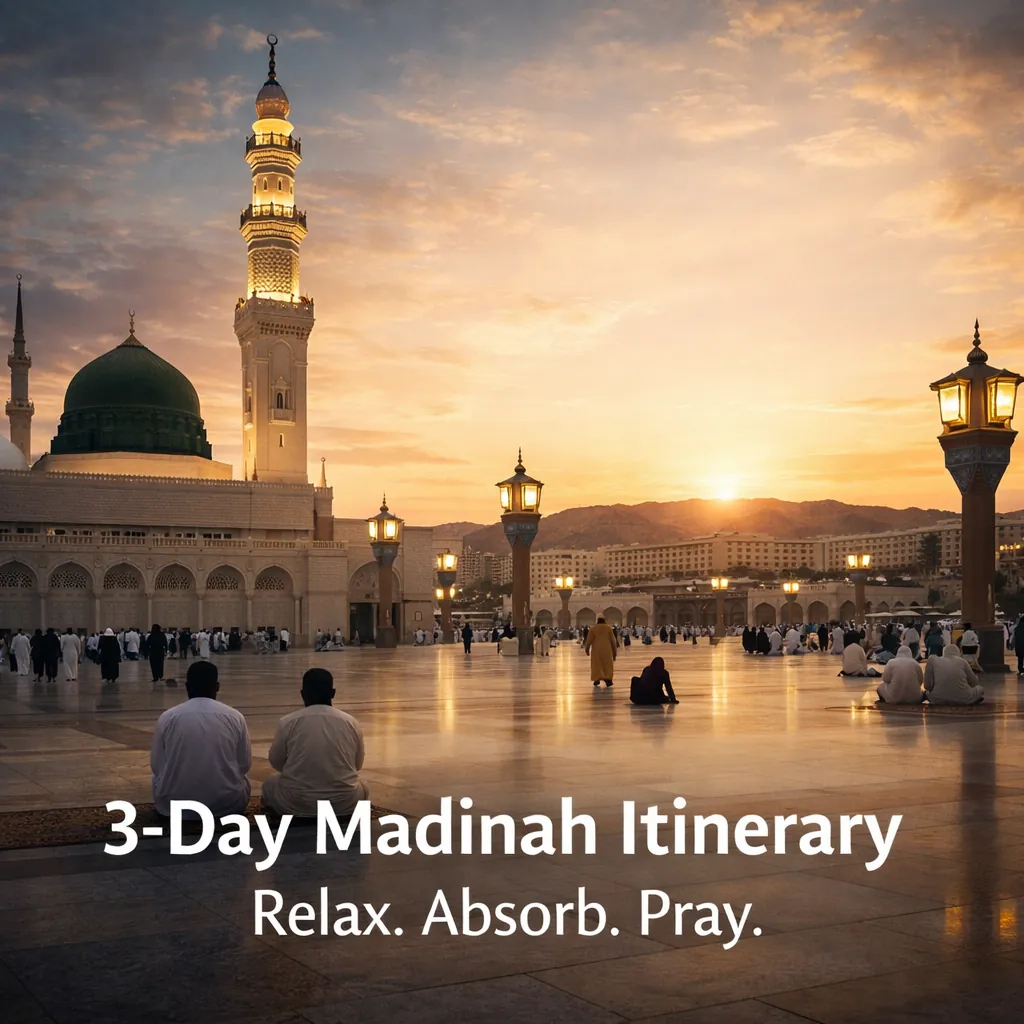
Madinah Sharif has a calm that feels different from other places. The streets move slower. People speak softer. Even your own mind starts to chill out after the first day. When someone asks me for a 3-Day Madinah Itinerary, I always say one thing first. Keep space in your schedule. Madinah is not a checklist city. It is a feelings city.
I went thinking I would run around and “see everything” fast. On day one I learned the lesson. I sat near Masjid an Nabawi after Fajr and time just slipped away. No regrets.
This guide is a simple but full plan. It balances worship time, rest, and a few famous spots. It also includes easy food ideas and small tips so the days feel smooth.
Before You Start (Tiny Tips That Save Your Day)
Stay close to Masjid an Nabawi if possible. Even a short walk distance changes everything because you keep going back for prayers without stress.
Carry these basics:
A small prayer mat
A light jacket or shawl for early mornings
Comfortable shoes for walking
A refillable water bottle
A small bag for dates or snacks
Best calm times in the Masjid:
After Fajr
Late night after Isha
These hours feel less crowded and more peaceful.
You may also Like:
Best Places for Shopping in Madinah Sharif (Dates, Abayas, Perfume)
List of Ziyarat Places in Madinah Sharif
Day 1: Settle In + Masjid an Nabawi Vibes
Morning: Arrival and check in
If you arrive in the morning, check in, freshen up, and keep it light. Madinah heat and travel tiredness can hit hard.
Quick goal for Day 1: settle your routine around prayers.
Late Morning to Dhuhr: First long Masjid session
Walk to Masjid an Nabawi early. Enter calmly. Sit. Breathe. Let your body reset.
If you feel emotional, that is normal. I felt it too. I was sitting there and suddenly remembered people back home asking for duas. It made the whole trip feel real.
Simple plan inside the Masjid:
Pray two rakah
Read Quran or listen quietly
Make dua with no rush
Rest your legs
Madinah rewards slow moments.
Afternoon: Light food + short nap
After Asr, eat something simple. Soup, rice, grilled chicken, or a small shawarma. Keep it easy.
Then take a short nap. Even 40 minutes helps.
Evening: Maghrib to Isha in the Masjid
Stay in the Masjid for Maghrib and Isha. Walk around the courtyards after Isha. The night air feels calm and people just flow.
My honest opinion: the courtyard lights at night feel unreal. It looks like a movie scene but quieter.
Optional: Date shopping near the Masjid
If energy is still there, visit nearby date shops. Buy Ajwa, Safawi, or mixed boxes. Shopkeepers usually give samples.
Day 2: Quba Mosque + Jannat al-Baqi + Uhud Area
Day two is the best day for exploring a little because day one already grounded you.
Early Morning: Fajr then rest
Pray Fajr at Masjid an Nabawi. Sit for a bit. Then head back to rest. A full day is coming.
Morning: Visit Quba Mosque
After sunrise and breakfast, go to Masjid Quba. Many visitors love praying here. The area feels open and clean.
How long to keep here: 60 to 90 minutes is enough for most people.
Midday: Back for Dhuhr at Masjid an Nabawi
Come back in time for Dhuhr. Eat lunch after.
Lunch idea: rice plate or grilled meat with salad. Hydration matters a lot.
Afternoon: Jannat al-Baqi (if open for visitors)
If you can visit, go with respect and calm. Keep expectations simple. Some days entry timings change.
Then return and take a short rest before heading out again.
Late Afternoon to Evening: Mount Uhud and surrounding sites
Go to Mount Uhud area. Even if someone is not a history person, the place still hits the heart. The landscape is quiet and powerful.
What to do there:
Walk around the viewpoint area
Reflect and read a little about the battle
Take photos respectfully
Keep water with you
Walking in open sun can drain energy fast.
Night: Dinner and a relaxed Masjid visit
Go back for Maghrib or Isha. Eat dinner after Isha. Keep it light again.
Small win: if you sleep early, day three feels much easier.
Day 3: Qiblatain + City Side + A Soft Ending
Day three is for a few more spots and a calm goodbye. Many people feel emotional on the last day. That is normal.
Early Morning: Fajr and long quiet time
Start with Fajr at Masjid an Nabawi. Then sit longer than usual. This is your final morning. Let it sink in.
I remember thinking, why did I rush anything on day one. The calm moments were the real highlight.
Morning: Masjid Qiblatain
After breakfast, visit Masjid Qiblatain. It is a meaningful site for many visitors. Spend some time inside, pray, and move on.
Late Morning: Islamic University area or simple local streets
If you enjoy calm walks, explore nearby streets, local bakeries, and small shops. If you want something more modern, plan a mall visit.
Afternoon: Shopping and gifts
This is the best time to buy gifts:
Dates and date sweets
Miswak
Attar perfumes
Prayer beads
Simple abayas or scarves
Tip: keep your shopping list short. You can end up wasting hours bouncing between shops.
Evening: Final Masjid session and farewell feeling
Try to pray Maghrib and Isha in the Masjid again. Take a final walk in the courtyard. Sit. Make dua for yourself and others.
A good ending idea: write a small note in your phone. What you learned. What you want to keep in your life after returning home. It sounds cheesy but it actually helps.
Extra Food Notes (Because Hunger Changes Your Mood)
Madinah has food everywhere. The main thing is timing.
Good times to eat:
After Fajr breakfast
After Dhuhr lunch
After Isha dinner
Simple safe options:
Grilled chicken and rice
Soup and bread
Light sandwiches
Fruit and yogurt from supermarkets
Supermarkets are great for budget and quick snacks.
Mini Packing List for 3 Days in Madinah
Two comfortable thobes or shalwar kameez sets
One light jacket
Unscented toiletries
Slippers for hotel
Power bank
Small umbrella if sun is strong
Medicine basics like pain relief and ORS packets
You may also Like:
Madinah Travel Tips for Families: Strollers, Elevators, Best Timings to Avoid Rush
Madinah Sharif First Time Visitors Guide