



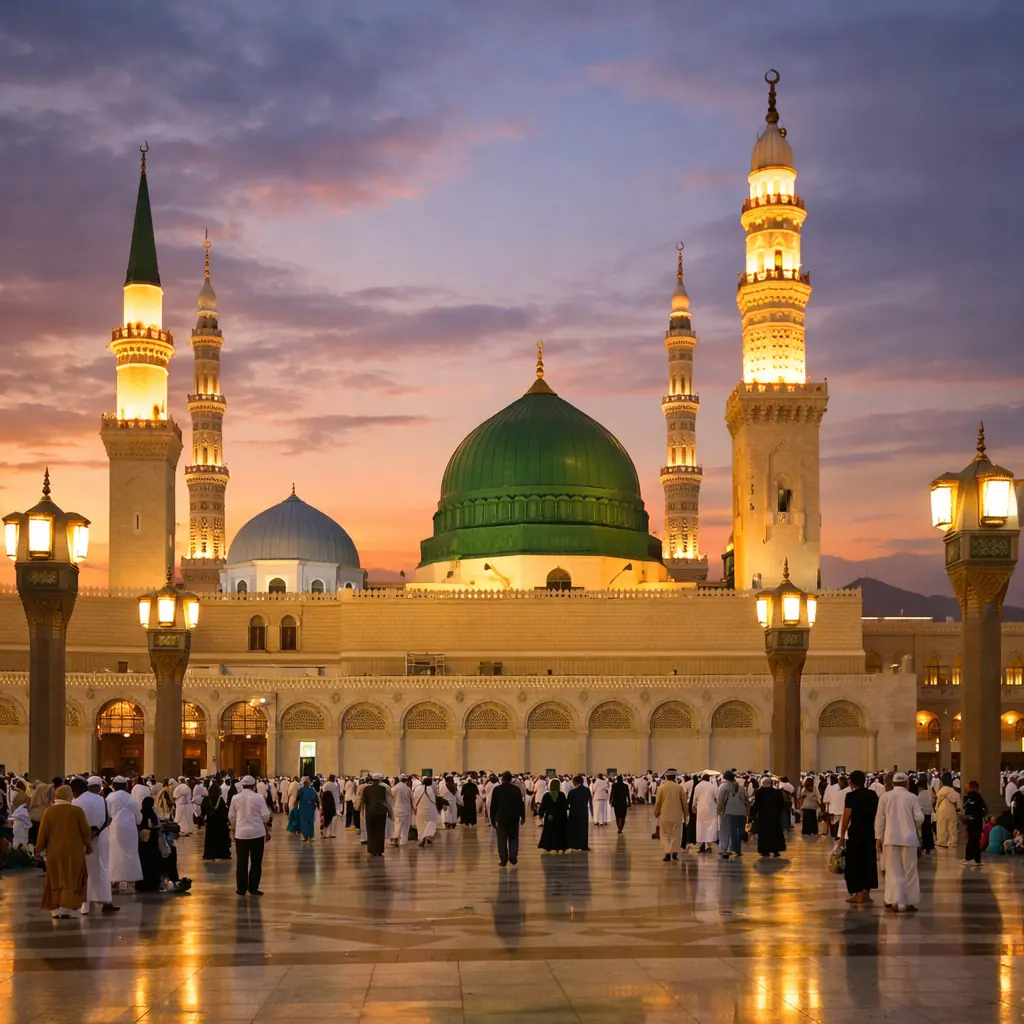
The first time I arrived in Madinah Sharif I expected a busy city with holy places and lots of people. That part was true. But I was not ready for how calm it feels inside the chaos. Even when the streets are full there is a softness in the air. It sounds weird to say but it felt like my shoulders dropped on their own. Like the city quietly tells the body to slow down.
This guide is exactly the kind of stuff I wish someone had told me before I went. No fancy travel talk. Just real tips. A few small mistakes too because honestly nobody speaks like a perfect brochure.
What Madinah Sharif feels like
Madinah Sharif is not a place where the best plan wins. It is a place where the best mood wins. Some days the body feels light and walking feels easy. Some days the heat or tiredness hits and even a short distance feels long.
The area around Masjid an Nabawi has its own rhythm. People move with purpose yet still feel gentle. Even small acts like sharing water or making space happen naturally. That kindness stays in the mind for days.
One personal thing. I thought I would be focused only on worship. I was. But I also kept noticing the simple beauty of everyday life. The way families sit together. The way elders walk slowly. The way strangers smile without needing a reason.
You may also Like:
Best Places for Shopping in Madinah Sharif (Dates, Abayas, Perfume)
List of Ziyarat Places in Madinah Sharif
Best time to visit and how to handle the weather
Heat can be the biggest challenge. Cooler months usually feel easier for walking and ziyarah. Warmer months can still be manageable but the schedule needs adjusting.
A simple pattern works well:
Early morning
After Fajr the air often feels lighter. Walking is calmer. The courtyards feel peaceful.
Afternoon
Afternoon is best for rest. Even a short nap helps a lot. A slow meal. Hydration. Quiet time.
Night
Night is where Madinah feels alive in a gentle way. Shops open. Families stroll. Many people prefer longer prayers and quiet reflection late at night.
If heat is strong then a small umbrella can be surprisingly useful. It looks simple but it saves energy.
Where to stay and why location matters
Staying near Masjid an Nabawi makes life easier. It reduces walking. It saves time. It helps when the body is tired.
If the budget allows then a closer hotel is worth it. Not because of luxury. Because of comfort and focus. Quick returns to the room between prayers feel like a gift.
Staying a bit farther can also work. Many travelers do it. It just needs planning for transport and walking. In hotter weather the distance feels double.
A small tip that helped me. Asking for a quieter room makes sleep better. Some rooms face busy roads and noise can be annoying at night.
Getting from the airport and moving around the city
Madinah airport usually feels organized. After landing the main goal becomes simple. Reach the hotel smoothly and avoid unnecessary stress.
Taxis are common. Shuttles also exist. The best choice depends on luggage and family. With heavy bags or kids a taxi feels easier even if it costs more.
Inside the city walking is great near the mosque area. For places like Quba or Uhud taxi is the normal option.
One habit that saved time. Keeping a screenshot of the hotel name in Arabic helped a lot. It avoids confusion with similar sounding hotel names.
You may also Like:
Madinah Airport to Hotel: Best Transfer Options (Taxi, Ride Apps, Shuttle)
Madinah Travel Cost Guide: Hotel Price Range, Food Cost, Transport Budget
Nusuk app and Rawdah planning
Many visitors try for Rawdah. It can require a booking through Nusuk depending on current system and time. Sometimes slots appear and disappear fast. It feels like a small lottery.
The best approach is simple:
Install Nusuk early
Create account and verify before travel
Keep checking time slots at different times of day
Keep phone battery healthy because app access matters
When the slot finally shows up it feels like a small victory.
Etiquette that makes the experience smoother
Madinah teaches manners without forcing it. Still a few basics make everything easier:
Clothing
Modest and comfortable works best. Soft sandals help because walking is constant. Carrying a shoe bag is useful. It keeps hands free.
Scent
Many people avoid strong scents in crowded prayer areas. Unscented toiletries can be a good idea.
Patience
Crowds happen. Lines happen. Sometimes a plan fails. Patience is part of the worship in a way. This is not a motivational line. It is just reality.
Ziyarah spots and how to pace them
Many visitors go to places connected to the Seerah and history. Common stops include Masjid Quba and the Uhud area. Some people add Masjid Qiblatain too. The key is pacing.
A better plan is spreading ziyarah over multiple days. One main stop per day. Then the rest of the day stays calm.
I made a mistake once. I tried to squeeze too much in one afternoon. By Maghrib my legs were done and my mood was off. The next day I slowed down and everything felt better.
Food tips that keep the stomach happy
Food near the mosque is usually easy to find. Rice meals. Grilled chicken. Sandwiches. Soups. Desserts. Dates everywhere.
A simple trick. Starting with lighter meals helps the stomach adjust. Then trying new foods feels safer.
Hydration matters more than food. A traveler can eat less and still feel fine. Dehydration makes everything feel heavy.
Keeping ORS packets in the bag can be helpful. It is one of those boring items that suddenly becomes important at the worst time.
Money, SIM, and small daily essentials
Cash is useful for small purchases. Water. Snacks. Quick taxis. Some places accept cards. Still cash keeps things smooth.
A local SIM helps a lot. Maps. Nusuk. Hotel messages. It saves time and confusion. Even basic data is enough.
Power bank is important. Phones drain fast because of navigation and app use.
Visiting with family and kids
Madinah can be very family friendly. It just needs a slower pace.
One rest block every day helps
Snacks and water for kids avoid meltdowns
Meeting point outside the mosque area is smart in case family gets separated
Light stroller can help though crowds can make it tricky
One moment I still remember. A small child fell asleep on a prayer mat and nobody disturbed them. People walked around quietly. That kind of respect hits the heart.
Packing list basics before visiting Madinah Sharif
Packing light is better. Many things can be bought locally. Still these items feel genuinely useful:
Comfortable sandals
Small prayer mat
Shoe bag
Unscented soap and lotion
Power bank
Refillable water bottle
Light jacket for cool nights
Basic medicines and ORS
Small umbrella if heat is strong
Copies of passport and hotel booking
A small notebook also helps for notes and reminders. Phone notes work too. Paper sometimes feels calmer.
Common mistakes that spoil the mood
Overplanning every hour
Madinah feels better with open space in the day. Worship and rest need room.
Ignoring heat and tiredness
Even strong people get tired here because walking adds up fast.
Doing ziyarah at the most crowded time
Early morning or later afternoon often feels easier.
Carrying too much daily
Heavy bags make walking harder. A small crossbody bag is enough for essentials.
Final thoughts
Madinah Sharif is not only a destination. It feels like a reset. The best moments are often simple. Sitting quietly after Fajr. Sharing a bottle of water with a stranger. Watching the courtyard lights at night. Hearing the soft hum of people making dua.
If a trip feels imperfect that is fine. Even a tired day can still hold barakah. The goal is not a perfect schedule. The goal is a present heart.