



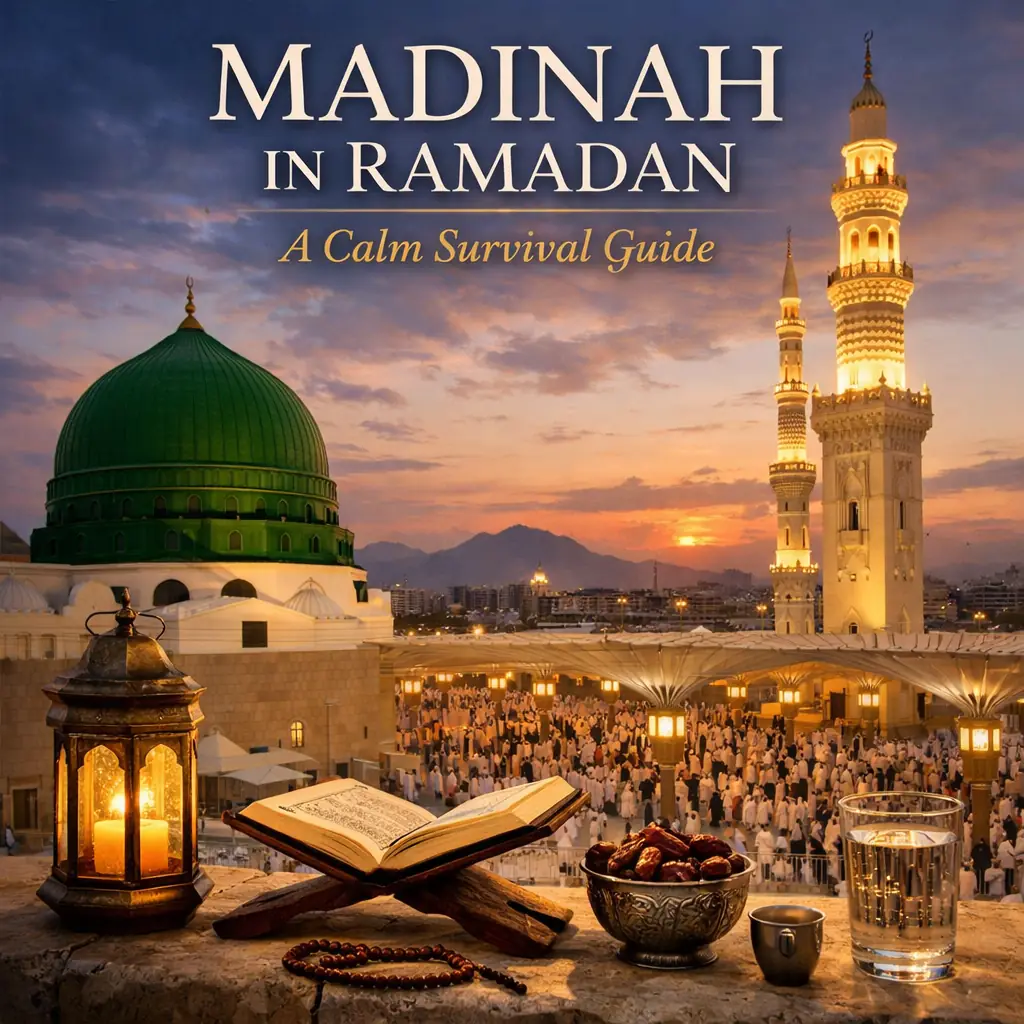
Madinah Sharif in Ramadan feels like someone turned the world volume down. Not fully silent, because it gets busy, but the busy still has a soft edge. Lights glow. People move with purpose. You hear Qur’an in places you would normally hear traffic. And somehow, even when the courtyards fill up, the place still feels gentle.
I went to Madinah Sharif with this dreamy idea that I would float from prayer to prayer like a calm movie scene. Reality was a little different. My feet hurt on day one. I got lost finding the right gate. I also underestimated how fast energy drops when the weather is warm and you are fasting. Still, I would go again. Madinah Sharif in Ramadan is special in a way that is hard to explain. So here is a survival guide, friend to friend, focused on staying calm while you enjoy it.
First thing to accept
Ramadan in Madinah has two moods. Daytime is quiet and slow. Nights can feel like a festival with worship. If you try to do everything, your body will crash. The calm trick is picking a simple rhythm and protecting it.
My rule became: one big worship goal, one small comfort goal, and one rest goal per day. That is it.
Where to stay if you want peace
If you can stay close to Masjid an Nabawi, life becomes easier. Not because you need luxury. Because walking back and forth in heat while fasting can drain you fast.
A close hotel means:
You can return for a short nap after Dhuhr.
You can freshen up before Maghrib.
You can leave right after Taraweeh without planning a long ride.
If a close hotel is expensive, try a place that is still walkable but with a straight route. Weird zigzag streets feel longer at 2 am.
You may also Like:
Best Hotels Near Al Masjid an Nabawi (Budget to Luxury)
Best Places for Shopping in Madinah Sharif (Dates, Abayas, Perfume)
Best daily rhythm that keeps you sane
Here is a simple schedule that worked for me.
After Fajr
This is the calmest time. Even if the courtyard has people, it feels organized. Sit for a bit. Read Qur’an. Make dua. Then go back to rest.
If you stay awake too long after Fajr, you will pay for it later at night.
Late morning to Dhuhr
Keep this light. Grocery run. Zamzam bottles. Laundry. Simple walk. Nothing ambitious.
If you want to visit a site like Quba Mosque, choose a day and keep it short. Taxi helps a lot in Ramadan because energy matters.
After Asr
This is when the city starts waking up. People head toward the masjid early. If you want a good spot, come earlier than you think. Bring patience. The vibe is beautiful but you will see crowds.
Maghrib and Iftar
Iftar in the masjid is its own experience. Dates. Water. Simple food. People share. Someone next to you will offer something even if they never met you. It made me emotional the first time, not even kidding.
Eat slowly. Pray Maghrib. Then decide if you want a proper meal outside or a light snack and rest.
After Isha and Taraweeh
This is peak time. It can get packed. If you are sensitive to crowds, aim for a spot where you can breathe. And keep a flexible mindset. Some nights you will pray comfortably. Some nights you will stand squeezed. Both count. Try to stay soft about it.
How to handle crowds without losing your mood
Crowds are part of Ramadan. The calm comes from planning small.
Pick a gate and stick to it
Choose a gate number near your hotel route. Use it daily. Your brain will relax because you will stop re learning the map every time.
Use landmarks
In the courtyard, everything can look similar at night. Pick a pillar area or a sign. Tell your family the same meeting point.
Keep shoes and slippers simple
This is a classic problem. Shoes disappear because people move them around. Use a cheap pair. Put them in a small bag if allowed. Or store them in the designated shelves and remember the section.
Protect your personal space quietly
No drama. Just step back. Move a little. Find a calmer corner. The masjid is huge. There is always another spot.
Food tips that save your stomach
Ramadan food can be heavy. If you eat heavy at Iftar, Taraweeh becomes hard. I learned this in the most obvious way. Full plate. Sweet drink. Then I stood for prayer feeling like a sleepy balloon.
Try this instead:
Break fast with dates and water.
Pray Maghrib.
Eat a small meal. Soup, rice, grilled chicken, yogurt.
Save desserts for later or share.
Also, keep ORS or electrolytes in your room. Hydration at Suhoor matters more than fancy food.
Suhoor strategy
Suhoor in Madinah can be late and lively. Some people eat in restaurants. Some eat in the room. If you want calm, room Suhoor is underrated.
Good Suhoor basics:
Water. A lot.
Oats or bread with eggs.
Fruit like banana.
Yogurt or laban.
Try to reduce salty and spicy food at Suhoor. Thirst is the real enemy in warm weather.
Clothes and comfort
Bring breathable clothing. Light layers help because nights can feel cooler than the day. Also carry a small prayer mat. Sometimes you will pray outside on tiles. It is fine, but your knees will thank you for a thin mat.
A small fragrance is nice, but keep it gentle. Many people are sensitive in crowds.
Health and energy
This is the part people ignore until they feel dizzy.
Rest is worship too.
A short nap after Dhuhr can change your whole night.
Keep snacks for non fasting kids or family members.
Carry basic meds. Headache tablets. Band aids. Blister plasters.
Foot care matters. Comfortable sandals or shoes for the walk back.
I had a tiny blister on day two. I ignored it. By day four, it felt like a mini knife. Learn from my mistake.
Women and families
If you are going with family, plan simple communication. Mobile signals can get slow in peak hours. Set a meeting spot. Write the hotel name on a note for kids.
For strollers, outer courtyard paths are easier. Inside can get tight. A baby carrier can be a lifesaver when crowds peak.
Little things that make Ramadan in Madinah feel smoother
Keep a small power bank. Phones die fast when you take photos and use maps.
Carry tissues. Always.
Have a small bag for Quran or tasbeeh.
Stay patient with lines. Food. elevators. taxis. Everything moves slower in Ramadan nights.
If you feel overwhelmed, step away and breathe. Even a five minute pause near a quiet wall can reset your heart.
A small personal moment
One night after Taraweeh, I walked out and the courtyard lights looked like stars sitting low on the ground. People were sipping water. Kids were half asleep on prayer mats. A man next to me smiled for no reason, like he was carrying good news inside him. I sat for a few minutes and honestly felt lighter than I had in months. Madinah does that. It pulls the stress out without making a big speech about it.