



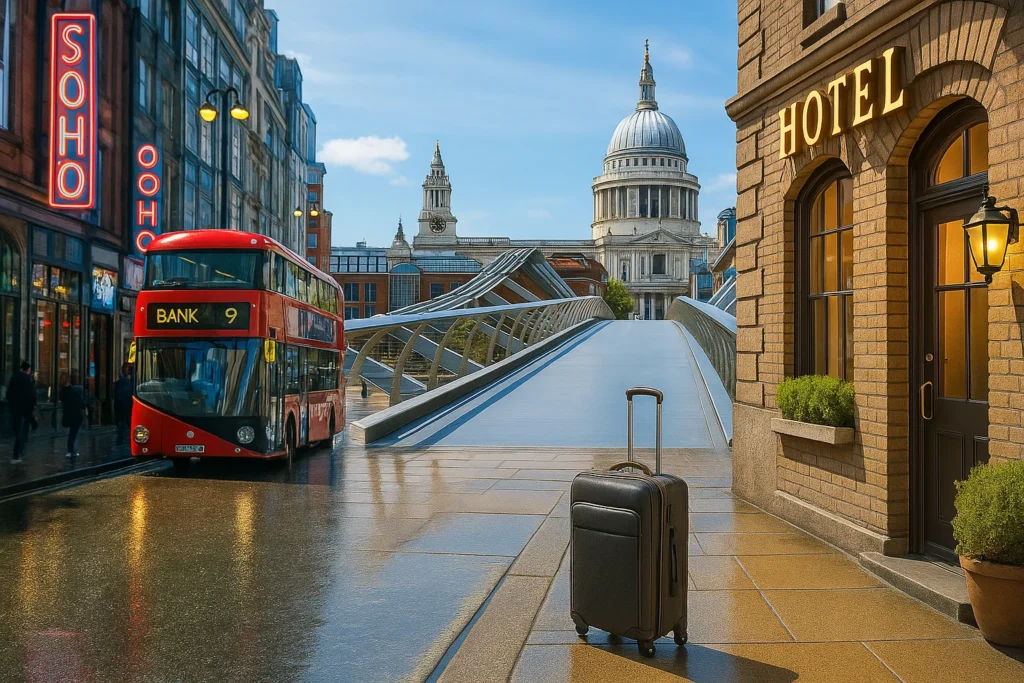
I reached St Pancras on a rainy afternoon with one bag, an Oyster card and a simple plan. Coffee first near the station. Then a slow walk to the hotel past red buses and bold pigeons. My first thought after check in. London is huge. The next. Pick the right area. It saves time money and peace of mind. I have stayed in a fancy hotel with helpful staff. I have also slept in a small room above a pub with a creaky floor. Both felt special in their own way. This guide is what I wanted on my first trip. Friendly and clear. A bit messy in a human way. Focused on places that feel good when you turn the key and rest.
Quick answer if you are in a rush
First visit and you want classic sights with easy walks: Covent Garden or Westminster.
Nightlife and late dinners: Soho or Shoreditch.
River views and modern vibe: South Bank or Bankside.
Calm streets and village feel: Marylebone or Notting Hill.
Families who want museums and parks: Kensington or South Kensington.
Business, fast transport, and clean lines: King’s Cross or Canary Wharf.
Tight budget yet central enough: Bloomsbury or Paddington.
Now the long version with small stories, because London deserves more than bullet points.
Covent Garden and the West End: walkable and lively
I booked Covent Garden once by accident. Best mistake. Street performers under the market arches. Tiny theaters tucked behind lanes. Food from early breakfast to post show noodles. You can walk to Trafalgar Square, Leicester Square and the river in minutes. Rooms lean small and rates jump on weekends, yet the tradeoff is golden. If you plan a heavy sightseeing plan and want to walk more than ride, plant yourself here.
Good for: first-timers, short trips, theater fans, people who like a busy doorstep.
Watch for: late noise near the piazza, higher rates during holidays.
Soho: restaurants, bars and energy that does not sleep early
Soho has a vibe that hits you fast. Neon glow on wet pavement. Little dessert spots that smell amazing. Jazz leaking from basement doors. I went out for dinner once and somehow tried three sweets on the same block because the scents kept dragging me along. Hotels swing from tiny boutique nooks to big name places. Streets sit tight and busy, so open the map before you book. If sleep matters, aim for a room on a quieter lane and you wake up happier.
Good for: food lovers, nightlife, creative shoppers.
Watch for: weekend crowds, room sizes that run small.
South Bank and Bankside: river walks and shiny glass
If your idea of London includes river views and modern architecture, try the South Bank. Morning jogs past the London Eye. Street food under Waterloo Bridge.Tate Modern is a short walk in Bankside. Cross the Millennium Bridge at sunset and the city feels new again. Hotels here often give more space for the price than the West End. A small bonus that feels big after a long day.
Good for: couples, walkers, families with strollers, skyline photos.
Watch for: events near the Southbank Centre that can fill paths during festivals.
Westminster and St James’s: postcard London
I slept once in a small hotel near St James’s Park. Woke up early. Walked past the park’s pelicans and ended up at Buckingham Palace before breakfast. The area feels grand. Statues. Wide avenues. A neat, formal mood. You can walk to Big Ben, Westminster Abbey and the river. If your mornings start better with a royal touch, this side wins.
Good for: first visit, history lovers, calm evenings.
Watch for: higher pricing and a bit of formality.
You may also Like:
Marylebone: village streets near the big shops
Marylebone feels relaxed. Bookstores, cheese shops, and a high street that actually feels local. Oxford Street is close for shopping yet far enough that sleep stays quiet. I loved a small cafe near Marylebone High Street where I wrote half of this guide between sips. You get that village inside the city feeling that many people chase.
Good for: slower pace, boutique hotels, Sunday farmers markets.
Watch for: prices that reflect the charm.
Mayfair: polished and posh
Mayfair is old money and new fashion. Art galleries, classic hotels with doormen who seem to know everyone, and smooth service. If you want afternoon tea with soft piano and sheets that feel like clouds, this is your square on the Monopoly board. Green Park and Hyde Park sit on the edges for morning walks.
Good for: special trips, anniversaries, luxury seekers.
Watch for: expensive rooms and extras that add up fast.
Kensington and South Kensington: museums and easy family days
When friends visit with kids, I often steer them to South Kensington. The Science Museum and Natural History Museum are right there. Hyde Park and Kensington Gardens bring easy picnic days. The Tube has three strong lines (District, Circle, Piccadilly), so moving around is simple. Hotels range from grand to practical. Many offer family rooms or small kitchenettes.
Good for: families, museum lovers, longer stays.
Watch for: tour groups at peak times, breakfast rooms that get busy.
Notting Hill: pastel houses and weekend markets
I once spent a Saturday morning weaving through Portobello Road with a warm pastry. The colors. The chatter. Notting Hill is romantic and photogenic. On weekdays it shifts to a quiet neighborhood with easy access to the Central line. Rooms here can be snug and some streets sit a fair walk from a station, so check your exact address.
Good for: couples, photographers, people who like a neighborhood feel.
Watch for: weekend crowds near the market.
Shoreditch and Spitalfields: creative, edgy, fun food
If your nights lean late and you like street art, go east. Shoreditch mixes pop-ups, coffee spots, and playful hotels. Spitalfields adds markets and brick lanes with curry aromas that follow you home. I had a tiny loft room once with a vinyl player and a stack of records. Slept short, smiled long.
Good for: nightlife, design hotels, food halls.
Watch for: noise on party streets and limited parking if you rented a car.
The City and Blackfriars: business core with weekend deals
The Square Mile hums Monday to Friday. On weekends rates can drop. Blackfriars sits right on the river and has quick bridges to the South Bank. If you are visiting for a show at the Barbican or a finance meeting, this zone keeps commutes short.
Good for: business trips, value on weekends, river access.
Watch for: quiet nights Saturday to Sunday if you want constant buzz.
King’s Cross and St Pancras: connections and cool new builds
King’s Cross used to feel like a station and nothing more. The makeover changed that. Coal Drops Yard added style, canalside walks, and restaurants with wide terraces. Trains head to Paris, Scotland, the north. If you plan day trips by rail, staying here removes stress. I once rolled my suitcase from a morning Eurostar straight into a nearby hotel and felt like a logistics genius.
Good for: rail travelers, modern hotels, quick hops to anywhere.
Watch for: construction patches as the area keeps growing.
Camden: music, markets, and canals
Camden runs on music. Pubs with stages. Markets that mix food, clothes, and vintage. The canal towpath to Regent’s Park is a calm counterpoint. Hotels vary from basic to funky. If you want character more than polish, you will like it here.
Good for: gig hunters, teenagers with big smiles, alternative vibes.
Watch for: weekend crowds and some late noise.
Greenwich: maritime history and wide skies
Greenwich sits a bit out, which is part of the charm. The Cutty Sark, the Royal Observatory, the park hill with that view. Take the DLR or the boat along the Thames and make the ride a small adventure. Great if you want a slower base with a local high street.
Good for: couples, families, wider rooms for the price.
Watch for: longer Tube rides into the center at night.
Canary Wharf: sleek towers and quiet nights
The towers shine, the paths are broad, and the DLR slides past like a quiet toy. Hotels often come with pools and modern gyms. Weekends are calm. If your trip mixes work in the wharf and play in the center, the Elizabeth line will be your best friend.
Good for: business travelers, value on weekends, gym lovers.
Watch for: fewer late night food spots compared with Soho or Shoreditch.
Budget tips that actually help
Pick by Tube line, not just by postcode. Being near the Central, Piccadilly, Jubilee, or Elizabeth lines removes a lot of friction.
Travel off peak if you can. Midweek often beats Friday and Saturday for prices.
Consider hub style hotels. Compact rooms from brands like Z, hub by Premier Inn, or citizenM give clean design and smart storage. If you spend your day out, this works fine.
Apart hotels rock for families. Small kitchen, laundry, and a door you can close after bedtime.
Ask for a room away from the lift. London lifts can groan like old ships. Your sleep will thank you.
A few hotel names to start your search
Classic luxury: The Savoy, The Ritz, Claridge’s, Shangri-La at The Shard.
Boutique chic: The Hoxton (various areas), The Ned, Mondrian Bankside.
Reliable wallet savers: Premier Inn Hub, Z Hotels, Travelodge.
Apart-hotel style: Native Bankside, Locke hotels, Citadines near Trafalgar Square.
I am not ranking these. Think of them as a small compass. Read recent reviews and map the exact street. That last part matters more than star ratings in London.
My honest pick if a friend asks today
If you want max variety with minimal transport time, I usually say Bankside or the South Bank. You get the river path, Tate Modern, Borough Market, and easy bridges to the West End. If you plan museums with kids, South Kensington wins. For a food weekend, Soho still has my heart, though my sleep suffers a little. For a quiet escape with nice morning walks, Marylebone feels right. That is the beauty of London. Many centers inside one city. Pick the center that matches your mood, not just a map pin.
Comments