



The first time I landed in Boston. I arrived on one of those gray half rainy afternoons. My hotel was near Back Bay so I walked out of the Orange Line with a small suitcase and zero idea how the city fit together. Within ten minutes I passed brownstone houses on one side and a strip of shiny shops on the other and thought ok this place feels a bit fancy and a bit old at the same time.
That is how Boston works in general. Half history lesson half regular modern city. If you have only a few days you want to hit the places that really show that mix. Not every single museum, just the spots that make you think “yes this is Boston”.
Here are the best places to visit in Boston from my point of view explained like I am talking to a friend who is planning a first trip.
1. Boston Common and Public Garden
Boston Common sits right in the center. It is the oldest public park in the United States and feels kind of like the city living room. People cut across the grass on their way to work. Kids chase pigeons. There is usually at least one person having a deep phone call under a tree.
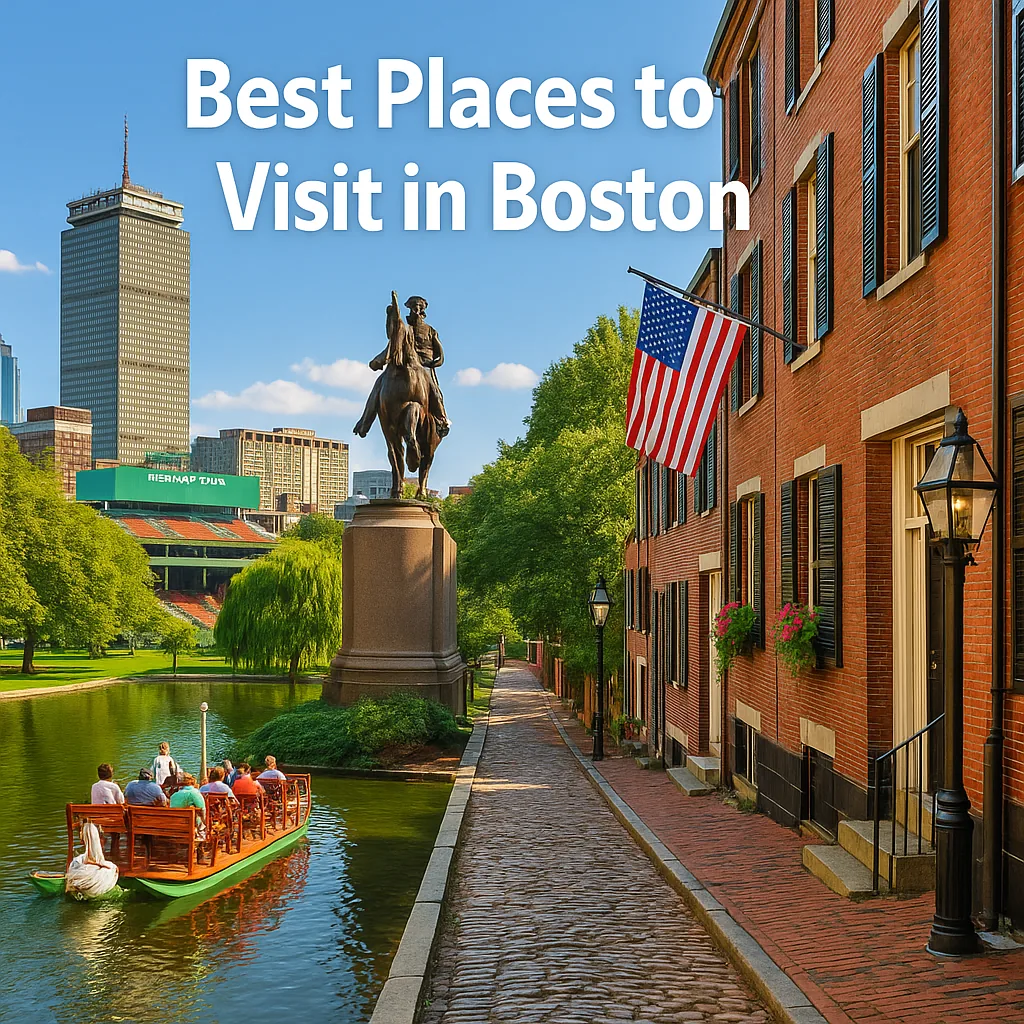
Right next to it you have the Public Garden. That one is more polished. Neat paths flowers trees and the small lagoon in the middle. The famous Swan Boats float here in season. The first time I went there I sat on a bench near the water and ended up staying almost an hour just watching boats turn slowly in circles.
If you stay in Back Bay or Downtown this area becomes your landmark. Morning coffee walks, late afternoon breaks, and the start of the Freedom Trail.
You may also Like:
2. Freedom Trail
The Freedom Trail is that red brick or painted line that runs roughly four kilometers through central Boston. It connects a whole set of historic spots from the American Revolution. Instead of reading a thick book you just follow the line and the city does the teaching for you.
On the way you pass:
The Massachusetts State House with its gold dome
Park Street Church and Granary Burying Ground
The Old South Meeting House
The Old State House
Faneuil Hall
Paul Revere House in the North End
Old North Church
If you walk the full route you finish over the river at the Bunker Hill Monument in Charlestown. I liked doing it in two parts. One day from Boston Common to the North End. Another day from there over the bridge.
You can tag along with a guided tour or just follow the line with your phone in hand. Even without a guide you still feel the “this happened here” vibe when you stand under the balcony of the Old State House or next to Paul Revere’s tiny wooden house.
3. The North End – Boston’s Little Italy
If you only have energy for one neighborhood after the historic walk, make it the North End. Narrow streets small brick houses flags laundry balconies and the smell of food everywhere.
The main fun here is simple. Walk slowly get a bit lost and keep an eye on bakery windows. People argue about which bakery serves the best cannoli. I tried a couple and honestly the best one is usually the one you eat when you are slightly hungry after walking.
Hanover Street and Salem Street hold most of the restaurants. Some feel a bit touristy and some feel more local. Nothing wrong with either. Sit somewhere order pasta or seafood and watch the traffic drama outside when people try to park on a tiny street that clearly hates cars.
4. Faneuil Hall and Quincy Market
This area sits between Downtown and the harbor and can feel busy but it is one of those places that visitors end up walking through anyway. Street performers in the open space and older brick buildings and a covered food hall inside Quincy Market.
For pure food quality you can maybe find better places elsewhere, but this area still works well for a quick lunch. I grabbed a clam chowder in a bread bowl there one cold day and it hit exactly right. You also have small shops and stalls with souvenirs if someone at home requested a Boston mug for no reason.
If crowds feel too much, step a bit away toward the Greenway or the waterfront and the noise drops fast.
5. Seaport District and Boston Harborwalk
Boston touched the harbor from the beginning yet for a long time visitors spent more time inland. Now the Seaport District has grown into a modern area with glass buildings restaurants and views over the water.
You can follow the Harborwalk paths, sit on the edge of the pier, and watch boats move around. On a clear evening the light over the skyline looks great. It is the kind of place where you walk with a coffee in hand and start planning an imaginary life where you somehow work in one of those office towers with big windows.
If you like contemporary art, the Institute of Contemporary Art (ICA) is here too with a terrace that looks out over the water.
6. Back Bay and Newbury Street
Back Bay is the neighborhood that probably gave you your mental picture of Boston before you visited. Long streets of brownstone houses trees churches and a grid that for once actually makes sense.
Two main landmarks here:
Newbury Street – long row of shops cafés galleries and people watching
Copley Square – Trinity Church, the Boston Public Library and modern office buildings around one open plaza
One afternoon I sat on the steps of the public library just watching people cross the square in every direction. Students, office workers, tourists, an old man walking three small dogs that refused to obey any rule. That moment felt more “real Boston” than any monument.
This is also a good area to stay because you can walk to many places and still have food and transport options nearby.
7. Fenway Park
Even if you are not a baseball fan Fenway Park is worth your time. The stadium is old small and full of stories. Home of the Boston Red Sox and proud of it.
On game days the whole area turns into a street party. People in red jerseys bars full screens everywhere. You can join a tour of the stadium during the day or go for a night game and absorb the noise and lights.
I went once with almost zero baseball knowledge and still had fun. Half the joy is listening to people around you complain about strategy like they run the team and the other half is basic stadium food after a long day of walking.
8. Museum of Fine Arts and Isabella Stewart Gardner Museum
If the weather turns bad or you just feel like a slower day, Boston’s museums are strong.
The Museum of Fine Arts (MFA) has a huge collection. American art, European painting, Egyptian rooms, Asian pieces, and more. It is the kind of place where you think you will “just see a few things” and suddenly three hours vanish.
A short walk away, the Isabella Stewart Gardner Museum feels totally different. This one is smaller and more personal. The building looks like a Venetian palace around a central courtyard full of plants. Rooms hold paintings, sculpture and small objects that the owner collected in her life.
I liked the Gardner more than I expected. Something about the courtyard with green plants and soft light made me forget there was a city outside.
9. Across the river: Cambridge and Harvard Square
Yes, Cambridge is technically another city but from a visitor point of view it feels like part of the same puzzle. A quick ride over the river and suddenly the mood changes.
Harvard Square mixes students and tourists. Bookshops street musicians coffee shops and of course the Harvard campus itself with brick buildings and wide lawns. You can walk through the yard, join a student led tour or just sit on a bench and pretend to be deep in thought about philosophy while actually scrolling your phone.
Farther along the river you have MIT, more modern and a bit more industrial in feeling. The view of Boston’s skyline from the Cambridge side of the Charles River looks great at sunset. Joggers pass by cyclists ring their bells rowers move slowly over the water. Very “college town” but on a large scale.
Conclusion
Boston is one of those cities that keeps growing on you. First trip might focus on the big hits like the Freedom Trail and Harvard. On the second trip you find a quiet corner bench in the Public Garden or a small bakery in the North End and suddenly the place feels more familiar, like a city you could actually live in and not just visit once.
You may also Like:
FAQs – Best Places to Visit in Boston
Q1. How many days are enough to see the main places in Boston?
Q2. Which area is best to stay in for visiting these places?
Q3. Is Boston walkable for new visitors?
Q4. When is the best season to visit Boston?
Q5. Is Boston very expensive to visit?
Comments