



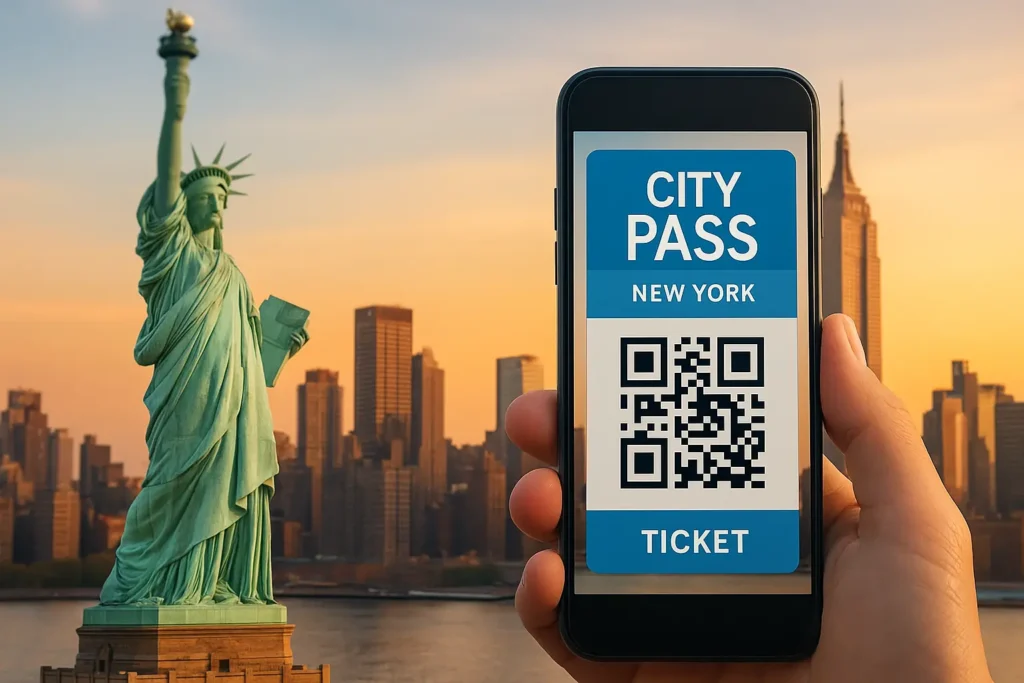
I landed in New York on a gray morning with a tiny carry on and big plans. My cousin met me near Bryant Park with two coffees and a grin that felt like a dare. We had three full days. I wanted a little of everything. Sky views. A museum or two. A boat ride past that famous green lady. Good pizza in between. He said one line first. “Grab a city pass and stop overthinking.”
So I did. Then I ran the math after the trip, and again when a friend asked last week. Here is the honest version that I wish I read earlier. No glossy sales copy. No hype. Just how it felt to use a pass in the real city. And where it saves. And where it does not.
What the New York “city pass” idea actually means
New York has a few pass brands. They all work in a similar way. You pay once. You unlock entry to a bundle of big attractions. Some passes use a set number of choices. Others work by days. The headliners are usually the same. Empire State Building. Top of the Rock. The Met. The American Museum of Natural History. 9/11 Museum. Statue of Liberty or the Harbor cruise. Edge at Hudson Yards. And so on.
The promise is simple. Pay less than buying everything one by one. Skip a few box office lines. Keep your plans flexible because you choose times and places as you go. That is the pitch.
Does a pass really save money?
Short answer. Yes, if you plan even a little. No, if you prefer to drift with zero structure and only visit one or two places.
Here is a small snapshot from my notes. Prices swing a bit by season and ticket type, but the shape stays similar.
Top of the Rock: around 40–45 USD
Empire State Building: around 44–50 USD
The Met: around 30 USD
American Museum of Natural History: around 28 USD
Circle Line Sightseeing or similar harbor cruise: around 40–50 USD
9/11 Museum: around 30 USD
Now imagine a two day trip where you hit four of those. That is easily 140–170 USD if bought separately. A pass that covers the same set often sits below that total. So the more you do, the better it gets. If you only want one view deck and a slow wander in Central Park. Then a pass can feel like overkill.
My quick story using a pass
Day one we started slow in Midtown. Coffee at Culture Espresso. Then Top of the Rock near sunset. The pass scanned in seconds at the kiosk. Nice and painless. We walked out with that purple sky view and felt smug for a minute. Later we added The Met the next morning and the harbor cruise in the afternoon. That mix alone paid for the pass. We still had one more pick. So we used it for the American Museum of Natural History. The dinosaur hall made me feel like a kid again. Worth every minute.
The win was not only the money. It was mental space. I hate juggling separate tickets on the fly. The pass put the plan in one place. That felt calm in a city that is loud from sunrise to midnight.
When a New York pass shines
Short trips with big goals
If you have 2–4 days and want to tick off icons, a pass fits like a glove. You will stack two or three things per day. That is where the savings kick in.First time visitors
The pass covers the hits. Think classic museums and famous skyline spots. A simple way to build a starter itinerary.Families
Herding kids at a ticket line is a special kind of sport. Prebooked entries reduce queue time. Many passes also include Map apps and quick directions that help when energy drops.Bad weather backup
Rain can flood the day. With a pass you can pivot to indoor picks fast. MoMA or The Met can save a wet afternoon.
When a pass is not worth it
Slow travel mood
If your dream is long walks, neighborhood cafes, and free parks, skip the pass. New York has endless free or pay-what-you-wish joy. The High Line. Prospect Park. Staten Island Ferry view near sunset. Grand Central ceiling. Street art in Bushwick. A bagel bench in the sun.One hero attraction only
Say you only want to visit the 9/11 Museum and then spend the rest of the time in food markets. Buying a pass for one entry does not make sense.You live for niche spots
Many small galleries and oddball museums are not included. If your list is Tenement Museum, a tiny jazz club, and a secret ramen bar under a bridge. A pass will not help much.
Choice based vs day based passes
I tested a choice based style. Pick 3, 4, 5, or more attractions. Use them within a set window. This version suits visitors who like a light plan. You can spread visits across a few days and keep mornings free.
Day based versions give access to many places for 1, 2, 3, or more calendar days. This can be great value if you have strong energy and love ticking boxes. It can also push you into sightseeing marathons. Fun for some. Exhausting for others. Be honest about your pace before you buy.
The line skipping myth (and the truth)
A pass does not teleport you past every line. That is fantasy. What it often does is remove the ticket purchase step so you go straight to the security or timed entry queue. For very popular spots in summer, you still need to reserve a time slot in the pass app. That matters for the Statue of Liberty and some view decks. The key is simple. Once you buy a pass, open the app and reserve your must-do entries right away. Then relax.
Real world route ideas that make a pass sing
Two day sprint
Day 1: Top of the Rock late afternoon, walk Fifth Avenue to Times Square, ramen near 52nd Street
Day 2: The Met in the morning, quick Central Park loop, harbor cruise in the afternoon for skyline photos
Three day balanced
Day 1: Empire State morning, New York Public Library peek, Bryant Park lunch
Day 2: American Museum of Natural History, coffee on the Upper West Side, sunset walk on the High Line
Day 3: 9/11 Museum, Oculus, late day ferry or Edge at Hudson Yards
In both cases a 3-choice or 4-choice pass fits well. You save and keep space for free wandering.
Small tips that made my pass work better
Pick one major sight per half day
Back to back museums can fry the brain. Mix indoor with outdoor.Stack your view deck with clear weather
Check the sky in the morning and swap if needed. Many passes let you shift times within the valid window.Eat close to your next stop
New York food is a joy but lines are real. Grab a slice near your target to stay on schedule without stress.Carry a tiny battery pack
Your pass lives on your phone. So battery is your ticket.
Quick cost example (rough but helpful)
You plan 4 entries: Top of the Rock, The Met, Harbor cruise, 9/11 Museum. Buying direct can hit around 150–160 USD total. A 4-choice pass often lands below that. Even after fees. That is a clean win. Swap one item and the picture hardly changes. The pattern is consistent across seasons.
Verdict: Is a New York City pass worth it?
Yes, for most first timers and short-stay visitors who want at least three big attractions. It saves money in a simple way. It also saves small headaches. That matters in a city that moves fast. If your plan is slow and mostly free wandering, then skip it and feel no fear. New York shines either way.
I loved having the pass on my phone. I loved tapping through the turnstile at The Met with zero drama. I loved catching the skyline breeze on the boat without thinking about a last minute price jump. The pass felt like a quiet assistant in my pocket. That is worth something too.
Conclusion
A New York pass is not magic. It is a tool. In the right hands it slices through planning fog and saves real cash. In the wrong plan it sits in your email while you sip cold brew in the Village and shrug at museums. Know your pace. Choose a handful of sights that truly excite you. Then decide. For me the pass felt right. I would do it again on a short visit. And I would skip it on a lazy week of neighborhood wandering and long deli lunches. That balance is the answer.
You may also Like:
Walt Disney World Tips for First Timers: Genie Plus and Rope Drop
FAQs: New York City Pass
New York City Pass
Comments