



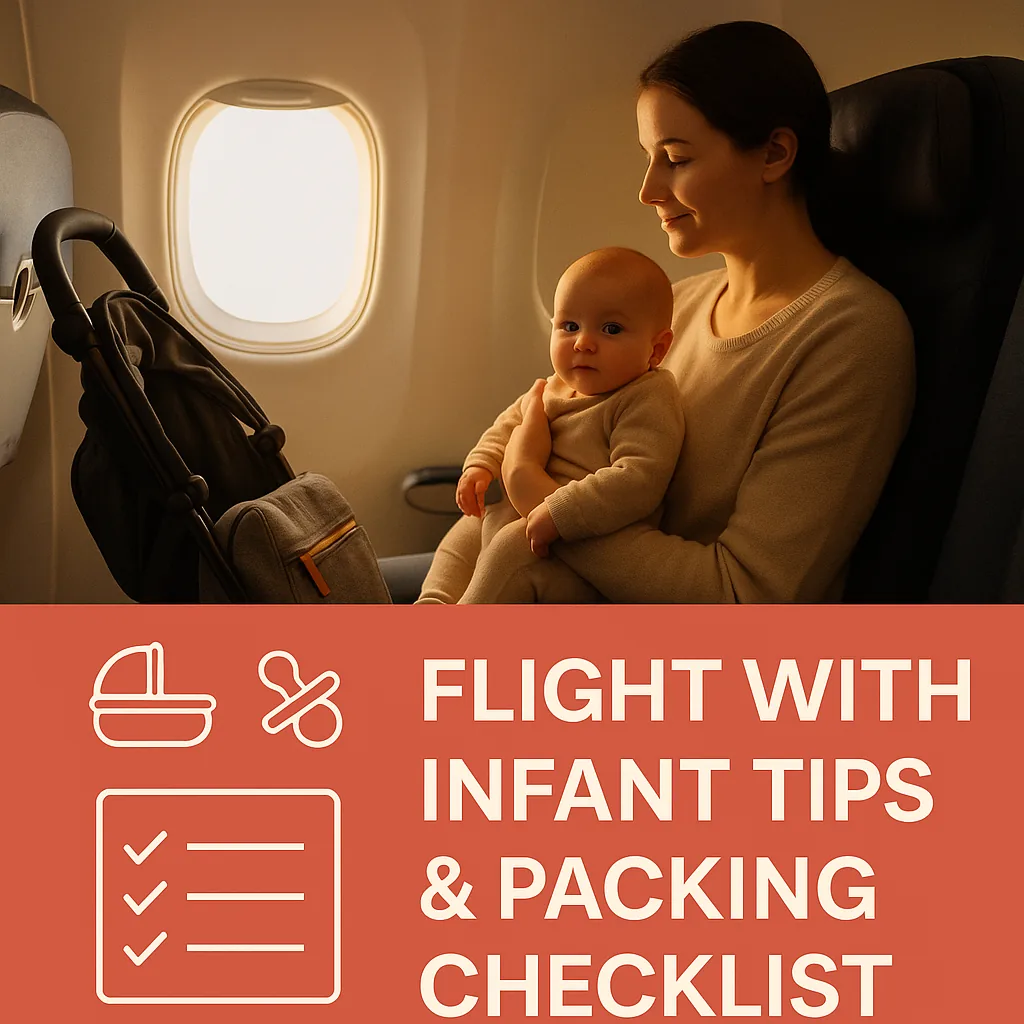
I still remember our first long flight with our tiny human. Two backpacks. One very serious pacifier. A seat number I memorized like a password. I walked onto the plane half brave, half worried, and fully determined to keep the mood light. The trip taught me a lot. Not fancy guru stuff. Just human, practical, slightly messy tips that made flying with a baby feel possible… even good.
This guide keeps it casual. Real talk. Friendly steps. Some lines are short on purpose because real travel feels like that.
Big picture in one minute
Flying with an infant becomes calmer when you control three things: timing, comfort, and tiny rituals. Time your flight around naps when possible. Shape comfort with smart layers, simple snacks and a small set of familiar toys. Keep a few rituals steady: a pre boarding diaper change, a sip during takeoff and a soft song at landing. Do those well and the rest starts to relax.
Booking and seats: small choices, big peace
Bassinet seats
Many long-haul airlines offer bassinets in bulkhead rows. These go fast. Ask at booking and again 72–48 hours before departure. Even when the system looks closed, a human agent can work magic if you are polite and clear.
Aisle vs window
Aisle gives quick access for wiggles, bathroom, and walks. Window gives a wall to lean on and a bit of privacy during feeds. With two adults, I like window + middle. One adult flying solo with baby might prefer aisle for freedom.
Extra seat dream
If budget allows, an extra seat changes everything. Your arms will thank you. If not, aim for less popular rows. Sometimes gate agents can move you to a spot with an empty middle. Smile, ask once, accept the answer.
Car seat or lap
An FAA-approved car seat on a paid seat is safer and usually comfier for naps. Lap infant is cheaper and fine for many families. Pick the option that fits your route and your stress level. I used a car seat on an overnight and lap on a short hop. Both worked.
Packing: the “under-seat survival kit”
I split baby gear into two zones:
Under-seat bag (reachable all the time)
6–8 diapers for a medium haul
A slim pack of wipes
Portable changing pad
Two spare outfits for baby, one T-shirt for the adult holding baby
Zip pouches: one for clean stuff, one for mess emergencies
Muslin cloth or small blanket
Pacifiers on a clip
Two small toys that make soft sounds only
Baby pain reliever and a simple thermometer
Empty bottle for water, formula, or milk as needed
Snacks for the adult too. Hungry parent equals grumpy flight
Overhead bag (backup gear)
Extra diapers and wipes
Larger blanket
Extra formula or shelf-stable milk if used
Bulkier toys or books
Light baby carrier for airport walks
Keep the under-seat kit minimal and tidy. When baby needs the thing, you grab it fast, not after a bag explosion.
Security checks without stress
Arrive a bit early. A calm start helps everyone. Baby foods, formula, and breast milk have special allowances in most airports. Declare liquids with a friendly line like, “Baby milk inside.” Keep them in a separate pouch. Ask for hand screening if you prefer. Staying polite works better than any hack.
Stroller strategy: if your stroller folds small, gate-check it. For the airport walk, I prefer a soft carrier. Hands free is gold when a boarding pass flies away or you need to sip water.
Takeoff and landing: the pressure plan
Ear pressure can bother small ears. Help them swallow during climb and descent.
Feeding during takeoff and the last 30 minutes before landing works well
If feeding is not the moment, offer a pacifier or a sip of water
Keep calm yourself. Babies read our faces like books
A soft, boring routine helps: dim the light hood on the stroller or cover your shoulder with the muslin, gentle humming, one simple phrase you always use for naps. Repetition beats noisy entertainment.
Sleep on board: not perfect, still good
I tried to match flight time with nap time. It never matched perfectly, yet it still helped. Dress baby in layers so cabin temps are easy to fix. Warm head, warm feet. Those tiny socks have superpowers.
If using a bassinet, bring a thin sheet or muslin you trust. Keep toys simple. A crinkly page book can feel like loud thunder at 2 a.m. Keep lights low and voices slow.
When baby fights sleep, take a short aisle walk. Smile at the flight attendant. That small stroll can reset the mood. Then back to the seat, deep breath, try again. Honest truth: sometimes sleep does not happen. Survive the segment and celebrate the landing.
Feeding, bottles and spills that arrive at the worst time
Warmth is not always available. Pre-measure formula into small containers or use ready-to-feed packs. If nursing, wear an easy zip hoodie or top you trust. If pumping, ask crew for an outlet seat when possible. Crew have seen every scenario, and many are kind with hot water and timing.
Bring a few extra bibs. Drool finds a way. Keep a spare shirt in a zip pouch for yourself. When a spill happens, fix it fast and forget it. No one on row 24 will remember in two hours.
Diaper changes at 35,000 feet
Most wide-body planes have at least one lavatory with a changing table. Walk in first to check. Bring the pad, one diaper, a tiny wipe pack, and a spare onesie only. Do not carry the whole bag. Use a disposable diaper sack after. If the table is missing or tiny, the closed toilet lid plus pad can work in a pinch.
Entertainment on baby time
Screen time does not matter much at infant stage. Real world still wins.
Finger puppets
A soft rattle with gentle sound
Board book with faces
One toy on a short tether so it stops diving under seats
Rotate items every thirty minutes. Keep surprises small and frequent.
Your comfort matters too
Hydrate. Stretch legs. Trade turns if traveling with a partner. Close eyes for ten minutes even if baby is awake and calm with the other adult. Say yes when a kind seatmate offers to hold something or pass a toy. You are still a human on a trip, not a service robot for a tiny boss.
Jet lag with a baby: reset slowly
After landing, sunlight is your friend. Short outdoor walk. Regular feed. Keep naps normal length. Early bedtime at destination helps. Day one feels foggy. Day two feels better. By day three, the family rhythm returns.
Documents and tiny admin
Carry passports, infant ticket or proof, birth certificate copy if an airline asks for age, and any medical notes if relevant. Keep them in a flat pouch on your body. At boarding, present infant details with a calm smile. Staff love calm.
What I would repeat next time
Ask for the bassinet and check again later
Pack fewer toys, more wipes
Extra T-shirt for me at the top of the bag
Practice the nap routine at home with the same muslin and hum
Accept help from crew and kind neighbors
Celebrate small wins: one good nap, one easy landing, one friendly smile
I honestly felt proud after that first flight. Not because it was perfect. Because we did it. Small family, big sky, steady hearts.
Quick checklist (screenshot this)
Passports and infant proof
6–8 diapers in reach, more up top
Wipes, pad, sacks
Two spare outfits for baby, one for adult
Bottle or nursing gear, pre-measured formula
Pacifiers, two
Muslin, blanket
Simple toys, book, tether
Baby pain reliever, thermometer
Carrier for airport, stroller for gate check
Seat choice confirmed, bassinet waitlist asked
Snack and water for the adult
Calm mindset packed first
Final little pep talk
You got this. Flying with an infant feels big, yet it turns into a series of small, doable moves. A smile to the gate agent. A gentle sip at takeoff. A nap that lasts twelve minutes and still counts. Travel as a family is not about perfection. It is about movement, patience, and moments that feel brave in the middle and beautiful in the memory.
Comments