



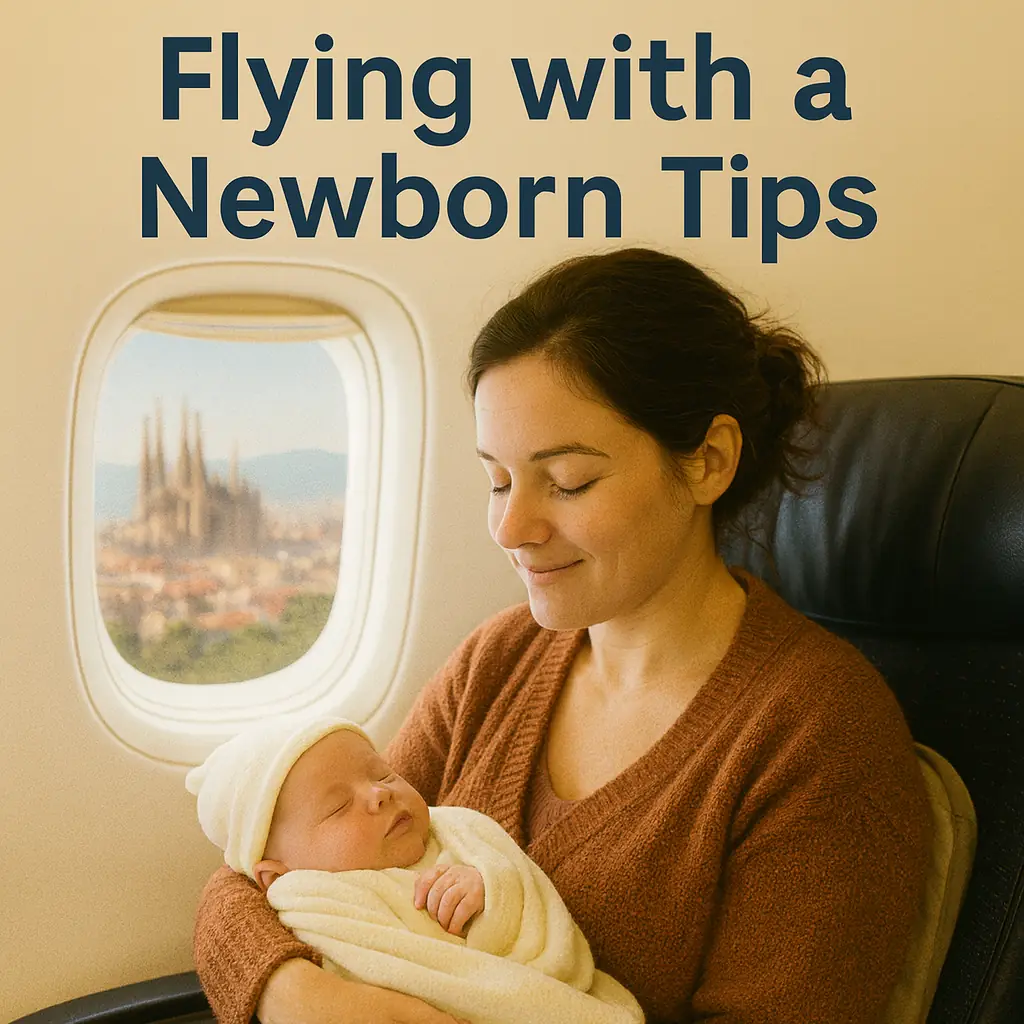
I remember our first flight with a tiny human better than many big trips. The taxi was late my coffee went cold and the carry on felt like a small pharmacy. I also remember a stranger across the aisle who smiled every time the baby squeaked. That small kindness set the tone. Flying with a newborn can feel heavy yet it can also be gentle. With a bit of prep and a flexible mindset the day flows. Below is the guide of Flying with a Newborn Tips, I wish I had on that first day. Friendly. Straight talk. Nothing clinical.
First, set the vibe for the day
Think simple. Feed, cuddle, move, repeat. Airports add noise and lights so keep your rhythm light.
Wake up earlier than usual. Slow starts lower stress.
Eat a proper breakfast. Parents run better with fuel.
Pack the diaper bag the night before. Less last minute chaos.
Share roles. One adult handles documents and boarding passes. The other keeps baby settled.
I used to list ten fancy hacks. Now I use two words: gentle pace. That alone changes the day.
Picking flights and seats
A newborn sleeps a lot. Use that to your advantage.
Timing: Midday flights often feel calmer than late night ones. Morning flights also work well for many families.
Layovers: Aim for one clean hop where possible. If a layover is needed, plan for at least 90 minutes to change diapers and reset.
Seats: An aisle seat helps for quick walks and diaper runs. Bulkhead rows sometimes offer bassinets on long routes; request early with the airline.
Noise: Far from the galley and bathrooms equals fewer sudden sounds.
I once booked a short layover to “save time.” It added pressure. A wider window to breathe felt better on later trips.
Packing smart without overpacking
Minimal gear that punches above its weight. That is the magic.
In the diaper bag:
8–10 diapers for a long day.
Thick wipes in a travel pack.
Two spare onesies, one spare sleeper.
Large zip bags for used clothes.
Lightweight swaddle or muslin.
Pacifier or two, if baby uses one.
Burp cloths and a small bib.
Baby blanket for warmth and privacy.
Hand sanitizer and a tiny moisturizer for dry cabin air.
Infant acetaminophen if your pediatrician says it is fine.
A small, soft toy with a gentle rattle.
Feeding kit:
If nursing: a cover if that adds comfort and snacks for the parent.
If bottle feeding: pre measured formula or pumped milk in labeled bottles plus an extra bottle. A small thermos with warm water helps.
Saline drops and a nasal aspirator can help with stuffy noses.
Travel hardware:
Soft baby carrier for hands-free walking through security and while boarding.
Compact fold stroller if you like, with a gate check tag.
Thin changing mat that wipes clean.
Keep heavy extras in checked luggage. The goal is a diaper bag that stays light and fast.
You may also Like:
Flight with Infant Tips and Packing Checklist
Security and boarding with less stress
Security lines feel intense with a newborn. A calm, steady approach helps.
Keep liquids for baby separate in a clear pouch. Present them with a simple line: “Milk for the baby.”
Wear easy shoes and minimal metal.
Use the carrier through the checkpoint if allowed by local rules. If asked to remove it, step aside, settle the baby, and breathe.
Pre-boarding exists for a reason. Use it. Early entry means time to strap bags, place bottles, and create a cozy corner.
A small tip that changed my life: once seated, build a mini station. Diaper supplies in the seat pocket, bottle within reach, blanket ready. That two-minute setup pays off.
Takeoff and landing: protect tiny ears
Pressure changes can bother new ears. A little planning eases it.
Offer breast, bottle, or pacifier during climb and initial descent. Gentle sucking relieves pressure.
Keep the head slightly raised.
If baby sleeps through takeoff, let sleep continue. Peace wins.
I keep one bottle ready right at pushback. Half the time, baby naps. The other half, the bottle saves the day.
In-flight rhythm that actually works
Cabin time breaks into small loops: feed, burp, change, cuddle, nap. That is the whole show.
Feeding: Small, frequent feeds beat one big session. Cabin air is dry.
Burping: Extra burp breaks help with gas. Pat slowly and let gravity help.
Changing: Aim to change once before boarding then on a steady schedule. Many planes have a fold down table in at least one lavatory. Bring your own liner.
Soothing: White noise from the engines helps. A soft “shhhh,” a light sway in the aisle, and a hand on the chest work wonders.
Sleep: Dim the seat light. Use a muslin as a shade. Protect nap time and the whole flight feels shorter.
Stay flexible. Babies sense tension. A calm parent is better than a perfect plan.
Handling cries without panic
Every baby cries on planes sometimes. It happens. People understand.
Check the basics: hunger, diaper, temperature, gas, ear pressure.
Move. Slow aisle walks calm both parent and baby.
Use contact. Skin-to-skin under a blanket can reset the mood.
Whisper a simple phrase in a steady tone. The cue becomes familiar.
When our newborn had a “full red face” moment mid-flight, I stood near the rear galley, swayed, and hummed a slow tune. Five minutes later, peace. Crew members usually help with a fresh cup of water or a friendly nod.
Health, paperwork and safety basics
Consult your pediatrician about flight timing after birth especially for preemies or special cases.
Carry digital copies of birth certificate, insurance cards and any travel letters.
Dress in layers. Cabin temps swing from warm to chilly.
Keep baby secure during turbulence. Use the approved method for your airline and country.
Wash hands often. A small soap sheet pack lives in my pocket.
Stroller, car seat and airport transfers
Gate check a compact stroller. It is a lifesaver between gate and baggage claim.
If traveling with a car seat, confirm airline rules beforehand. Many long-haul flights support a separate seat for the infant if you purchased one; a proper restraint increases comfort and safety.
For arrivals, pre book a transfer with an infant seat if possible. The last leg of the journey is easier when the seat is ready.
Parents need care too
The parent matters as much as the baby.
Hydrate more than you think.
Snack often. Nuts, bars, and fruit keep energy steady.
Short breath resets help: inhale four counts, hold four, exhale four.
Accept help from kind neighbors and crew when offered.
On our first trip, a seatmate offered to hold my coffee while I buckled the carrier. Small gesture. Big relief.
Sample day plan for a three-hour flight
T-2:00 hours: Feed at home. Dress baby in a sleeper and light hat.
T-1:30 hours: Arrive at airport. Change diaper after security.
T-0:30 hours: Pre-board. Build the seat pocket station.
Takeoff: Offer breast, bottle, or pacifier.
Cruise: Nap window. Parent hydrates and snacks.
Mid-flight: Diaper change, short walk, brief feed.
Descent: Offer pacifier or bottle.
Arrival: Gate-claim stroller, fresh diaper, slow exit.
This pattern keeps the day steady without heavy rules.
Real talk: expectations and wins
Perfect flights exist in movies. Real flights include small messes, missed naps, and a pacifier hunt under the seat. Success here is simple: safe arrival, a few peaceful stretches, and a parent who still smiles at the end. That is a win.
Final mini-checklist before you leave home
Diaper bag packed and light
Printed or digital copies of tickets and baby documents
Carrier ready, stroller labeled for gate check
Bottles prepped or nursing plan set
Two spare outfits for baby, one spare shirt for the parent
Small first-aid and saline kit
Snacks and water for adults
A calm mindset and a flexible plan
You will look back at this day and smile. The first flight with a newborn feels big before it happens. On the other side, it feels like a gentle badge of honor. You did it, and your tiny travel buddy did it too.
Comments