


I remember the first time I tried to understand Public Transport in France, I honestly thought I would mess it up. Too many lines, too many names, metro, RER, tram, trains… it felt like one of those things where you just stand there looking at a map pretending you understand.
But after a day or two, something changes. It starts to feel normal. Not perfect, but manageable.
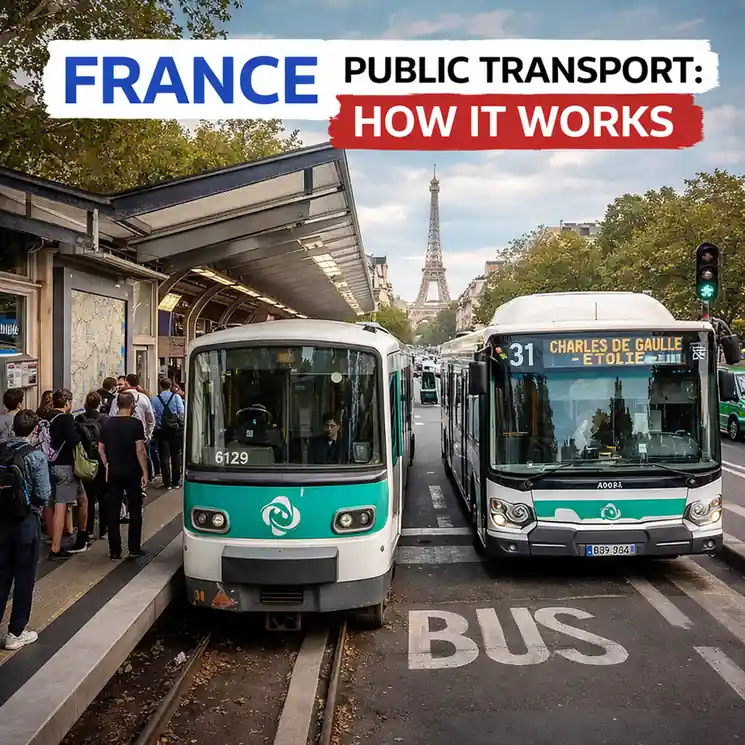
France public transport is actually built in layers. That is the easiest way to explain it. Inside cities you have metro, buses, and trams. Then for outside areas or suburbs you get regional trains. And for long distance travel the famous trains that connect big cities. Once you stop mixing everything together in your head, it becomes simpler.
First impression vs reality
At first, it feels confusing. Especially in Paris.
You walk into a station, there are signs everywhere, people moving fast, machines, gates, maps that look like spaghetti. If you arrive tired after a flight, even a simple ticket machine can feel stressful.
I had that moment too. I stood there for a few minutes just watching others before trying myself.
But then you take your first ride. You get on, sit down, look around and then you realize it is just transport like anywhere else. People going to work, students, tourists, nothing special.
After that, it becomes easier.
You may also Like:
Metro, RER, bus… what is all this
This is where most people get confused, so let me explain it in a simple way.
Metro is your main city transport, especially in Paris. Fast, underground, very frequent. If you want to move between attractions quickly, this is what you will use most.
RER is like a bigger train that goes further out. It connects the city with suburbs, airports and places a bit outside. Same idea, just longer distance.
Buses are slower but honestly I liked them sometimes. You can actually see the streets, not just tunnels. If you are not in a rush, bus rides feel more relaxed.
Trams are common in other cities like Bordeaux or Strasbourg. They feel clean and easy. Less chaotic than metro.
You do not need to master everything. Just use what makes sense for your route.
Tickets can feel confusing at first
I will be honest, ticket systems in France are not always super straightforward.
Different cities, different systems. Sometimes paper tickets, sometimes cards, sometimes apps. Paris especially has changed things over time so it can feel a bit messy.
But the basic idea is simple.
For short rides, you buy a single ticket or a day pass. If you plan to move a lot in one day, passes are better. Less thinking.
For trains between cities, you book a ticket for that journey. Some are flexible, some are fixed.
One small thing I learned the hard way… always keep your ticket until you fully finish the trip. Sometimes you need it again to exit or show it. I almost threw mine away once and realized too late.
You may also Like:
Trains across France are actually great
This is probably my favorite part.
Traveling between cities by train in France just feels… easier. No airport stress, no long waiting times, no security lines draining your energy.
You arrive at the station, find your platform, get on, and that is it.
I remember taking a train between cities and just watching the view outside. Small towns, fields, random stations. It felt more like part of the trip, not just moving from one place to another.
But one thing to remember, not all trains work the same. Some need booking in advance. Especially high speed ones. If you leave it last minute, prices can go up.
Is it easy for tourists
Yes… but not instantly.
The first hour can feel messy. After that, it improves quickly.
Most signs are clear enough. Maps are everywhere. Apps help a lot. And once you take a couple of rides, you stop overthinking it.
The biggest problem is usually not the system. It is you being tired, carrying luggage, maybe a bit stressed. In that state, even simple things feel complicated.
That is why I sometimes feel it is better to take a direct ride from the airport first, settle in, then start using public transport when your mind is fresh.
Small things that help a lot
Travel light. This makes everything easier. Stairs, platforms, trains, everything.
Check the station name properly. Some names look similar and it can confuse you.
Give yourself extra time, especially for trains. Big stations can take longer than expected.
Always validate or activate your ticket if required. Skipping that can lead to fines even if you paid.
And yes, sometimes delays happen. It is normal. Do not panic.
Public transport vs car
In cities, public transport is usually better.
Driving sounds nice in theory, but parking, traffic, narrow streets… it becomes tiring quickly. Trains and metro save a lot of energy.
Cars make more sense if you are going to countryside or places not well connected.
For most typical trips, public transport works just fine.