



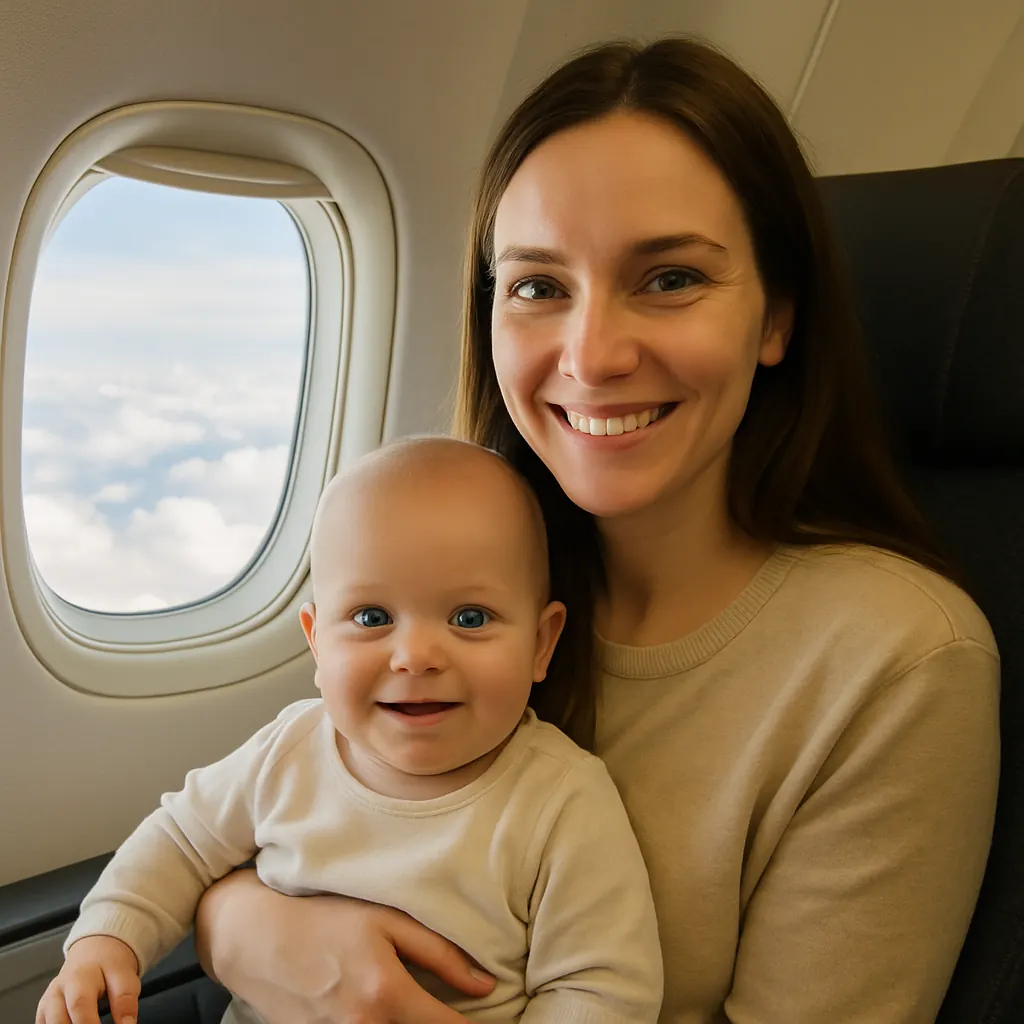
I still remember the first flight I took with my tiny human. Early morning. One sock missing. A bottle rolling under the seat like it had its own passport. I laughed a bit because the scene felt like a comedy short. Then the plane lifted and the whole cabin went quiet. My kid slept on my chest and I watched clouds that looked like soft hills. That first trip taught me simple lessons that I now share with friends. Here is my honest, casual guide to infant flight travel that actually helps in real life.
Quick snapshot
Aim for calm over perfect.
Feed during takeoff and landing to ease ear pressure.
Wear baby. Bring stroller. Use both.
Pack light but precise.
One backup outfit for you and two for baby.
Sleep routine > full schedule.
Gate check helps a lot.
Ask for help and smile. Crew helps when you ask kindly.
Before you book: small choices that make a big day easier
Pick flight times that match naps. Mid-morning works for many babies. Red-eyes can be magic or chaos. If your baby sleeps well with noise and dark, night flights feel like a win. If not, choose daylight with a relaxed pace.
Choose seats with a plan. Window keeps the space cocoon-like. Aisle makes diaper runs fast. If the airline offers bassinets on long haul, call and request a bulkhead row. Those go fast. No bassinet on many short hauls, so manage expectations.
Add extra time to all connections. Thirty minutes more can save your sanity. Airports look small on a map but walking with a baby, a bag, and a folded stroller takes real minutes.
Travel documents. Infant details, birth certificate if required, and your ID. Some routes ask for consent letters if one parent travels solo. A quick check on the airline site avoids a desk surprise.
Packing mindset: small kit, big impact
I like to split gear into four mini-bags so I can grab fast without deep digging.
Diaper pod
8–10 diapers for a travel day
Slim wipes pack
Foldable changing pad
Nappy cream in travel size
Two disposable nappy sacks
Feeding pod
Bottles and a clean teat set
Pre-measured formula or breast milk storage bags
Burp cloths
Light muslin that doubles as cover and sun shade
Comfort pod
Pacifiers with a clip
Soft blanket
Favorite small toy or teether
Baby headphones or simple cotton beanie for noise dampening
Clothes pod
Two onesies
Footed sleeper
Socks and mittens
One T-shirt or light top for you because spills pick parents
Pro tip: Pack a thin roll of masking tape. It labels bottles, reseals snack packs, and baby-proofs a sharp edge on a tray table in seconds.
You may also Like:
Flying with a Newborn Tips and Checklist for Stress-Free Travel
Stroller or carrier? Use both if you can
A soft carrier turns security and boarding into smooth steps. Hands free, baby calm with your heartbeat. A compact stroller helps during long walks and naps in terminals. Gate check the stroller with a cheap dust cover. That cover keeps it clean and adds a big pocket for jackets or the blanket you shed after check-in.
Airport day blueprint
Arrive a bit early, not super early. Extra time helps, but four hours stuck at the gate can spike tiredness. Two hours for domestic and three for international is a sweet spot in most cases.
Security with liquids for baby. Baby food and milk pass with special screening in many places. Keep them together in a clear pouch. Place them in the tray and speak up with a kind, short line like “Milk for the baby.” Officers know the drill.
Naps before boarding. Walk a quiet loop. Dim the stroller shade. A twenty-minute nap before boarding often sets a calm tone.
Boarding choice. Early boarding helps if you need overhead space and a slow setup. If baby sleeps better when active, board near the end to shorten seated time.
On the plane: keep it simple
Ears and pressure. Offer breast, bottle, or pacifier during climb and descent. Start a few minutes before wheels lift and again when the captain starts the final approach. Swallowing helps the Eustachian tube do its job.
Feeding rhythm. Small and steady works better than a big feast. Cabin air feels dry. Sip water if you are feeding and hydrate baby per your usual routine.
Diaper changes. Most planes have a fold-down table in at least one lavatory. Bring only the diaper pod. No need to carry the whole bag. If the belt sign lights up, wait for calm air. No debate here. Safety first.
Sleep cues. Rebuild your home routine in mini form. Change into the sleeper. Dim the light with a muslin. Gentle hum. A soft hand on the chest. That pattern says “sleep time” even at 34,000 feet.
Noise and neighbors. A friendly hello to your row makes everything feel lighter. Most people soften when they see the effort you make.
Clean and calm hacks that actually work
Zip-lock kits. One for dirty clothes, one for clean. Swap fast and seal the mess.
Seat wipe on touch points. Armrests, table, window area. Quick, not obsessive.
Blanket as tent. Clip the muslin to the seat headrest cover to dim light without blocking air.
Mini trash. Keep one nappy sack open in the seat pocket for wipes and snack wrappers. Tie and bin at the end of service.
My small story from Madrid to Lisbon
We took a tiny hop and I packed like it was Mars. That extra bag made me sweat before security. On the way back I halved the gear. Baby slept with a hand on my shoulder. I read three pages of a book that had been in my backpack for months. Simple joy. The lesson was clear. Plan well. Pack tight. Then relax and let the day flow.
Jet lag with an infant
Babies adapt if you keep light cues clear. Daytime walks at destination. Morning sun on the face for a few minutes. Keep bedtime steps in the same order as home. Bath, feed, story, cuddle. It is fine if the clock shifts a bit. The order tells the brain what comes next.
Gear checklist you can copy-paste
Passports and booking codes
Infant ID or birth paper if needed
Soft carrier
Compact stroller with cover
Diaper pod with 8–10 diapers
Wipes, changing pad, cream
Two baby outfits, one adult top
Bottles, formula or milk bags, burp cloths
Muslin blanket, pacifier, tiny toy
Masking tape and two zip-locks
Hand gel and a few tissues
Light snacks for you (energy up)
What to skip
Giant nappy bag that turns into a black hole
New toys that smell strange and excite more than soothe
Strong perfumes or heavy lotion on travel day
Tight schedules that stack stress
Seating map tip for long haul
If you travel as two adults with a lap infant, pick an aisle and a window in the same row, leaving the middle empty. Many times that middle stays open. If not, a neighbor will often swap so your group sits together.
When things go off script
Babies cry. Planes shake. Milk spills. Breathe. Crew members handle this daily and most passengers have seen it many times. A calm parent sets the tone. Your kid reads your face fast. A gentle smile and slow moves beat any hack on the internet.
Final friendly pep talk
Flying with an infant feels big the first time. Then it becomes a set of simple steps. Pack smart, keep routines soft, ask for the seat you want, and give yourself grace. The destination will feel extra sweet when you land with a little teammate snoozing on your shoulder. And if a sock goes missing again, laugh and carry on. You got this.
Comments