



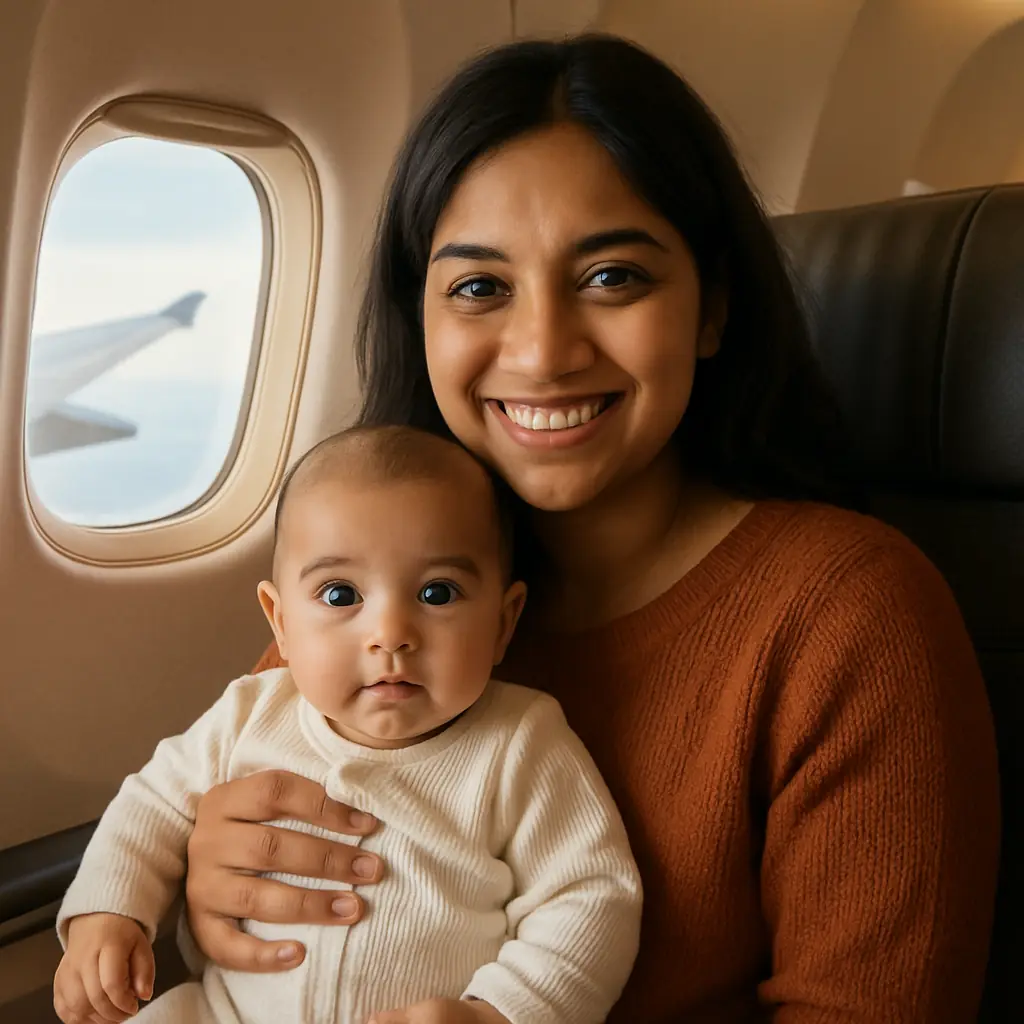
I still remember the first long flight with my tiny human. One backpack, one soft blanket, four pacifiers for backup, and a hopeful plan. I walked past the big gate screens with a mix of calm and tiny panic. The coffee was warm, the stroller squeaked a little, and that first smile from the check-in agent felt like a green signal. We landed hours later with a sleepy baby and a very proud version of me. This guide is the set of notes I wish I had on that day. Friendly, simple and tested in the real world.
The one-minute snapshot
Aim for flights that match nap times when possible. Late morning or early night often works well.
Sit near a bassinet row on long haul routes. Book early and call to confirm.
Keep a small “grab pouch” at your seat with wipes, two diapers, one onesie, a burp cloth, and a tiny trash bag.
Feed during climb and start descent. That swallow helps ears.
Expect some noise, some mess, and some smiles. A calm parent vibe turns the whole day.
Before you book
Pick smarter flight times. Midday departures cut the super early rush. Red-eyes can work if your baby sleeps easily in new places. Short layovers beat very long ones with infants. Two hours gives space to change a diaper, grab water, and reach the next gate without sprinting.
Seat choice matters. Aisle seats give freedom to stand and sway. Window seats offer a cozy corner for nursing or bottle feeds. For long haul, bassinet rows are gold. These sit at bulkheads and have weight limits. Reserve them early by phone, then reconfirm a few days before travel.
Plan luggage with intention. One carry on for parent gear one diaper bag for the baby. If you can gate check a stroller do it. A lightweight frame with a car seat or a compact umbrella stroller makes airports easier. A soft carrier helps at security and boarding.
You may also Like:
Flight with Infant Tips and Packing Checklist
Flying with a Newborn Tips and Checklist for Stress-Free Travel
Paperwork and small admin
Infants need ID on many routes. A passport for international trips sometimes a birth certificate for domestic. Airlines often require an infant ticket even when the baby sits on a lap. Ask for a printed or digital infant boarding pass. Add a note in your phone with booking reference, seat and bassinet request.
Packing list that actually earns space
Feeding: bottles, formula or milk, a compact cooler bag with ice packs if needed, nursing cover if you prefer one.
Clean-up: wipes, diaper cream, changing pad, zip bags for used clothes, two spare onesies, socks, a thin sleep suit.
Comfort: pacifiers with clips, small blanket, favorite soft toy, light hat for cold cabins.
Health: infant pain reliever if advised by your pediatrician, saline drops, a small thermometer, hand sanitizer.
Parent essentials: charger, power bank, snacks you can eat with one hand, refillable water bottle.
Pro tip: pack two mini kits. One lives under the seat in front of you for quick grabs. The second stays overhead as backup.
Airport security with baby gear
Security teams see baby items all day. Keep liquids and baby food together in a clear pouch. Present them with a smile. Car seats and strollers go through X-ray or get hand-checked. A soft carrier helps since your hands remain free. Empty that bottle pouch before the belt to save time.
Boarding and the first ten minutes onboard
Arrive at the gate early and speak with the agent. Ask kindly about the bassinet, a spare seat beside you, or a helpful seat swap. Pre-boarding helps, yet some parents prefer to board late so the baby spends less time in the cabin. Choose the path that lowers stress for you.
At the seat, set a mini zone. Wipes, one bottle, one pacifier, burp cloth, a small toy. Sanitize high-touch spots. Tuck your bigger bag overhead. Keep your jacket ready as a privacy shield if feeding moments feel easier that way.
Takeoff and ear comfort
Ears feel pressure changes during climb and descent. The goal is steady swallowing. Offer breast, bottle, or a pacifier during rotation and again in the last twenty minutes before landing. A calm pace beats frantic shushing. Gentle cheek strokes help many babies latch again if they pop off.
Settling into the cruise part
Think in short loops.
Loop A: feed → burp → cuddle → nap.
Loop B: short play → diaper check → walk the aisle once → reset.
Cabin noise can be your friend. The soft hum acts like white noise. A light blanket over the bassinet or your arm builds a mini cocoon. If the seatbelt sign turns on, cradle hold at a slight angle often keeps the baby settled.
Diaper changes at 35,000 feet
Many planes have at least one changing table in a lavatory. Bring a tiny kit, not the entire bag. One diaper, a few wipes, a pad, cream if needed. Wear a wrist loop for pacifier so it stays with you. If turbulence kicks up, wait for a smoother patch unless it is urgent.
Feeding without stress
Cabins are dry. Offer smaller feeds more often. Warm bottles are nice yet room temp is fine for many babies. If you need warm water, ask the crew with a friendly smile. Solid food for older infants travels best in small reusable containers. Silicone spoons weigh nothing and clean fast.
Meltdown moments
Every baby has a voice. A few neighbors will smile, a few may sigh, most will keep reading. Your calm energy matters more than any fancy gadget. Stand up, sway in the galley when allowed, or bounce gently in the aisle during quiet times. Light pats, a soft hum, and slow breathing help both of you.
I once walked slow figure-eights near the exit door while cabin lights dimmed. The tiny human stared at the wing light and drifted off. That small walk saved the last two hours of a long night.
Sleep strategy that actually works
Bring a familiar scent, like the baby’s crib sheet or swaddle. Dress in layers. Cabins swing from cool to warm. Use a soft cap if the head gets chilly. Shield from bright screens with your jacket edge. If the baby naps, you rest as well. Hydrate, close eyes, even ten minutes resets your mood.
Jet lag with an infant
Babies adapt slower than adults yet not forever. For trips under four days, keep the home rhythm as much as possible. For longer stays, nudge naps and bedtime by thirty minutes per day toward local time. Morning sunlight and a gentle walk set the new clock. Bedtime baths help anchor the evening.
Arrival without chaos
Skip the first crowded aisle rush if you can. Pack patience for the last ten minutes when everyone stands at once. After landing, change the diaper in a calmer restroom by baggage claim. Strap the baby into the stroller, sip water, and breathe. You did it.
Common mistakes to avoid
Overpacking gear that never leaves the bag. Aim for versatile, not bulky.
Skipping your own snacks and water. Low energy makes everything harder.
Ignoring your route’s bassinet policy until the last day. Call ahead and confirm.
Letting one tough moment define the trip. Flights are a series of small resets.
Quick day-of timeline
T-4 hours: final pack, load stroller, charge power bank.
T-3 hours: arrive at airport for international, less for domestic with status or trusted lane.
T-2 hours: check in, ask for bassinet confirmation, request spare seat if available.
T-90 minutes: security, bottle check, bathroom break.
T-60 minutes: reach gate, refill water, warm layer for the baby.
T-30 minutes: pre-board or wait for last call, your choice.
Boarding: set your mini zone, sanitize, deep breath.
Climb: feed or pacifier for ears, settle.
Cruise: loop A or B, slow rhythm.
Descent: feed again, soft landing.
Personal tiny hacks that saved me
A small roll of painter’s tape fixes snack bags, labels bottles, and seals a toy to the tray for a bit.
A scarf works as shade, blanket, and nursing cover.
A cheap carabiner clips the diaper bag to the seatback pocket so it stays put.
Silence mode on your phone and one offline cartoon for emergencies. Even thirty seconds can break a cry cycle.
Conclusion
Air travel with an infant is not a test of perfection. It is a team effort where small wins add up. A kind gate agent a helpful neighbor your steady breath and a baby’s slow blink at the window light. Pack the essentials plan the basics then let the day flow. You will land with stories and a little more confidence for next time.
Comments