



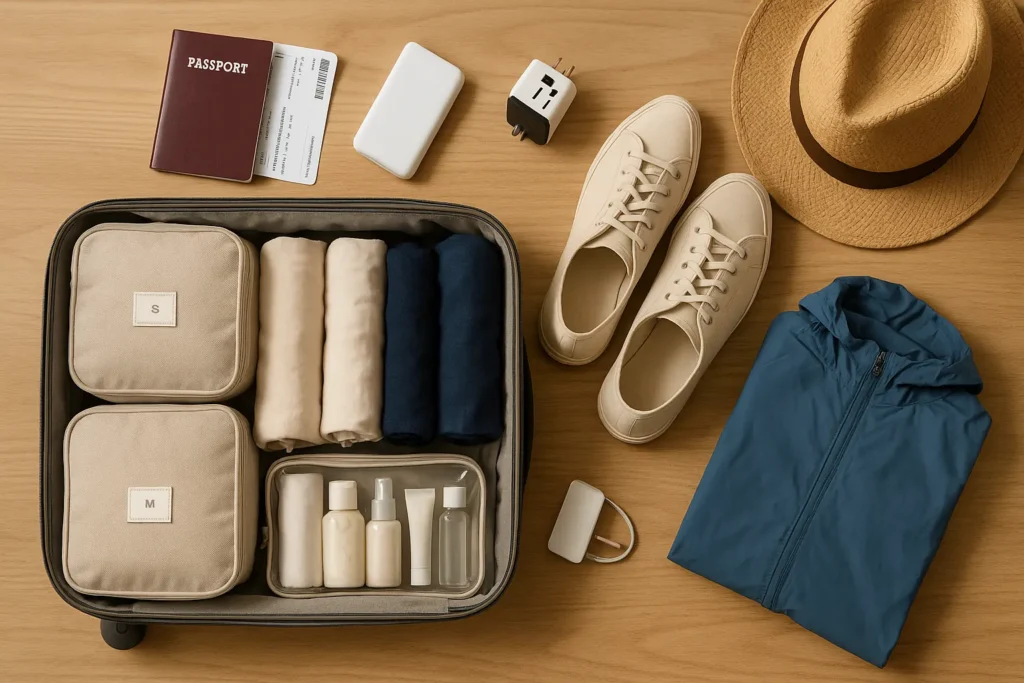
I packed for a weekend in Porto last year and somehow ended up with four shirts that felt the same and no charger. Classic me. Since then I built a simple system that saves time, stress, and money. It is not fancy. It is real. Here is the playbook I use now, step by step, with small stories, tiny wins, and a few “learned the hard way” notes.
Start with the trip shape
Every bag starts with three things: trip length, climate, and plans. A three-night city break in spring needs layers and comfy shoes. A two-week island holiday needs sun gear and light fabrics. A winter lapland adventure needs serious insulation. Sketch the shape first. It takes one minute. It guides everything.
I take a sticky note and write:
Nights: 3
Weather: mild, some rain
Plans: walk a lot, cafes, one nice dinner
That little note sits on the bed while I pack. It keeps my brain honest.
Pick the bag that limits you in a good way
Bigger bag invites chaos. A cabin roller or a 30–40L backpack forces smart choices. For work trips, a slim carry on with a laptop sleeve. For weekend hops, a soft duffel or small backpack. If a long trip includes trains and stairs, I go backpack. If it is a flat city with smooth pavements, I go roller. Let the bag match the terrain, not ego.
The 5-4-3-2-1 base rule
This is my default for a one-week warm to mild trip. Adjust up or down for fewer or more days.
5 pairs of socks
4 tees or casual tops
3 bottoms (two casual, one smart)
2 pairs of shoes (walkers + smart casual)
1 light jacket or knit
Cold weather? Swap one tee for a thermal layer. Heatwave season? Swap the jacket for a linen shirt. Hiking plan? Replace one casual bottom with quick-dry shorts.
You may also like:
First Time Flying Tips
Things to do on a Long Flights
The two-pile trick
I place everything on the bed in two piles:
Musts: passport, wallet, phone, tickets, meds, glasses, charger, power bank, keys
Nice-to-haves: the second hoodie, extra jeans, fancy belt, extra book
I pack the musts first. Only when that is done, I review the nice-to-haves and cut half. That last cut is where the magic happens. The bag starts to breathe.
Fabric matters more than brands
Fast drying fabrics save space and laundry time. Merino blend tee in winter. Light cotton or linen in summer. Dark colours handle stains better. A thin packable rain shell beats a heavy coat during shoulder seasons. Fabric that dries overnight means two tees can work for a week with quick sink washes.
Shoes: choose for pavement, not photos
Two pairs max. One pair you can walk in for hours. One pair for dinner or light dress codes. Break in shoes at home. I learned this in Lisbon on those lovely stone pavements where new sneakers turned into ankle drama on day two. Never again.
Toiletries: shrink the universe
I have a small pouch that lives in the carry-on all year. Travel size toothpaste. Tiny face cream tube. Solid shampoo bar when flights stack up. A small spray bottle that I fill with whatever hair product is current. A few plasters. Nail clipper. That pouch means I can pack at speed without raiding the bathroom.
Tip: refill tiny bottles after each trip. Future you will smile.
Tech kit: the three-cord rule
Travel eats battery. I carry one universal plug, one USB-C cable, one lightning or second USB-C based on my phone, and a short cable for the power bank. Add earbuds and a tiny USB stick. That is it. Laptops ride in a slim sleeve. Chargers go in a mesh zip bag so security checks stay calm.
Packing cubes vs rolling
I use one medium packing cube for tops and one small cube for underwear. Bottoms lie flat. Jackets wear the empty spaces. For backpacks, rolling works well. For rollers, cubes keep the lid tidy. No single right way. Try both once and pick your style. The goal is simple: open bag, find stuff fast.
Laundry on the road
A small zip bag with a couple of detergent sheets changes the game. Quick sink wash at night, dry by morning. I use a thin travel clothesline when the hotel radiator is not friendly. For longer trips, I plan one laundry day mid-way and pack less. Extra space feels amazing on day ten.
Documents and money
Passport goes in a flat pouch with cards and a spare note. I keep a photo of my passport and IDs in a secure cloud folder in case of loss. For train or bus tickets, I download PDFs into a single “Trips” folder on the phone. No scavenger hunt at the barrier. Cash is small and local. Card is primary. A second card rides in the bag as backup.
Health and comfort
Bare minimum med kit:
Personal meds with labels
Pain relief
Antihistamine
Rehydration sachet
Blister plasters
Hand gel
Tissues
I also carry a soft eye mask and a tiny pack of earplugs. Airport benches and loud hotels exist. Sleep wins trips.
Weather proofing
Check forecast the night before. One packable layer covers rain and wind. In sun destinations, a cap and light scarf help more than expected. I once scoffed at the scarf idea, then used it as shade in Seville, then as a dust shield near a busy road, then as a neck warmer on a late bus. Multi-use gear earns its spot.
Souvenirs and space on the way back
Leave ten to fifteen percent space. Or carry a flat foldable tote for overflow. I had a trip to Porto where pasteis boxes became Tetris blocks. The tote saved me. If baggage rules look strict, ship heavy souvenirs or buy small local items like spices or postcards.
Wear your bulkiest items
If a knit or heavy shoes are part of the plan, wear them on travel days. The bag stays lighter. Temperature swings on planes make that knit handy anyway.
A tiny story from Madrid that changed my habit
I flew into Madrid on a rainy spring afternoon. Metro ride was simple, but the last walk to the hotel cut through streets with puddles. I carried a sleek case with smart clothes and no rain shell. By the time I reached the lobby, my blazer had a damp line across the back. After that day I always pack a packable shell, even on “it probably will not rain” trips. It weighs nothing. It saves a mood.
Quick lists you can copy
Universal carry items
Passport + cards + small cash
Phone + power bank + two cables
Water bottle (empty through security)
Earbuds + eye mask + earplugs
Pen for forms
Hand gel + tissues
Simple snack
Warm trip base
4 tees
2 shorts or light trousers
1 linen or light shirt
1 light jacket or overshirt
Swimsuit
Sandals or light shoes + walkers
Hat + sunglasses + sun cream (small)
Cold trip base
2 thermals
2 knits
2 trousers
Insulated jacket
Beanie + gloves + scarf
Waterproof shoes or covers
Final pre-zip check
Chargers in mesh bag
Liquids in clear pouch
Passport in quick-access pocket
Keys for home return
Space for snacks or souvenirs
A photo of the packed layout (helps on the way back)
Common mistakes I made (and how to dodge them)
Ten black tees that feel the same. Mix textures or colours so outfits feel fresh.
New shoes on day one. Break them in at home.
Full-size toiletries. Travel sizes plus refills win.
Heavy guidebook. Save offline maps and notes on the phone.
No power bank. Flights and delays happen. Battery anxiety ruins vibes.
Packing is a skill. It gets easier. On my last run to Porto I packed in fifteen minutes and felt calm at security. Light bag. Clear head. More energy for pasteis.
Conclusion
Pack light, plan loose and give yourself room for surprise. The best trips often start with a calm zip and a bag that feels easy on the shoulder.
You may also like:
How to Sleep on a Plane
Tips for Flying – Guide to Stress Free Air Travel
FAQs: Packing for Travelling
How far in advance should packing start?
Two nights before works for most trips. Lay things out, sleep on it, cut extras the next day. Last-minute rush leads to missed chargers and sad socks.
Carry-on or checked bag for a week?
Carry-on works if climate is stable and plans are simple. If sports gear, gifts, or jackets join the party, one checked bag makes sense. Keep a spare outfit and meds in the carry-on in case a suitcase wanders.
Are packing cubes worth it?
For many travellers, yes. Cubes group items, reduce rummaging, and keep clean clothes away from laundry. If cubes feel fussy, try Ziplocs first. Same idea, cheaper test.
What about laundry on long trips?
Plan one laundry day or do quick sink washes with detergent sheets. Fabrics that dry overnight make a big difference. A thin clothesline helps in rooms without radiators.
How to pack liquids for flights?
Use travel bottles under 100 ml in a clear pouch. Place that pouch near the top of the bag for fast security checks. Tight caps plus tape around lids reduce leaks.
What is the best way to pack shoes?
Wear the heaviest pair on travel days. Stuff the other pair with socks to save space and keep shape. Place them in a simple shoe bag or shower cap to protect clothes.
How to avoid wrinkled clothes?
Roll soft tees and casual items. Fold structured shirts with tissue paper in the crease. Unpack or hang key pieces on arrival. Steam from a hot shower can help in a pinch.
Any smart security tips?
Keep passport and primary card on your body. A second card and spare note live in the bag. Store scans of documents in a secure cloud folder. Use hotel safes with care and take a photo of the safe code slip if provided.
How to choose outfits that mix well?
Pick a colour lane. Warm neutrals or cool neutrals plus one accent. Aim for pieces that work in at least two outfits. A light overshirt can be layer, sun shield, or dinner-ready top.
One thing many travellers forget?
A small bag for laundry. It keeps the main bag fresh and makes repacking simple. That and a pen for forms. The pen matters more than people think.
Comments