



My longest run was Barcelona to Tokyo with a layover that felt like a side quest. I remember the quiet clack of wheels on tile at 5 a.m. And a paper cup of coffee that tasted brave and a seat neighbor who slept through four movies in a row. I learned a lot that day. Long flights reward simple planning and small habits. Nothing fancy. Just a smart set of moves that keep your body happy and your mind calm.
Below is a friendly guide that I share with friends when they ask how to survive twelve hours in a metal tube. It reads casual because travel is human. Some lines run short. Some wander a little. That is how trips feel anyway.
Pack a “seat pocket kit”
Keep essentials in one small pouch so you avoid wrestling with the overhead bin. My kit lives in a zip pouch:
Passport copy and a pen
Lip balm and a tiny face mist
Hand wipes and a spare mask
Gum or mints
Phone, cable, and a small battery pack
Earplugs and an eye mask
Slide the pouch into the seat pocket as soon as you sit. Everything stays within reach. Small win.
You may also like:
Things to Do on a Long Flight
How to Sleep on a Plane
Dress for a changing cabin
Cabins swing between cool and warm. The easy fix is breathable layers. A soft tee. A light hoodie. Wool socks. Shoes that slip on fast for security and for walks to the galley. Tight belts and rigid jeans look sharp at the gate and feel rough at hour eight. Choose stretch. Your back will say thanks later.
Choose your seat with a purpose
Window lovers get a wall to lean on and no aisle traffic. Aisle lovers get freedom to stand. Middle seats make life harder. If you value sleep, pick a window. If you value movement and frequent restroom trips, go aisle. Over the wing gives a smoother ride. Far away from galleys and lavatories brings more quiet. If you need extra space, an exit row can help, as long as you can handle the door responsibility.
Hydrate early, snack smart
Cabin air feels dry. Drink water in small sips through the whole flight. A refillable bottle helps a lot. I bring simple snacks that sit well: nuts, a banana, oat bars, plain crackers. Heavy sauces and big sugar spikes feel fun for ten minutes and then your body protests. Salt creeps up too. Keep it light. Keep it steady.
Make sleep possible, even if you only drift
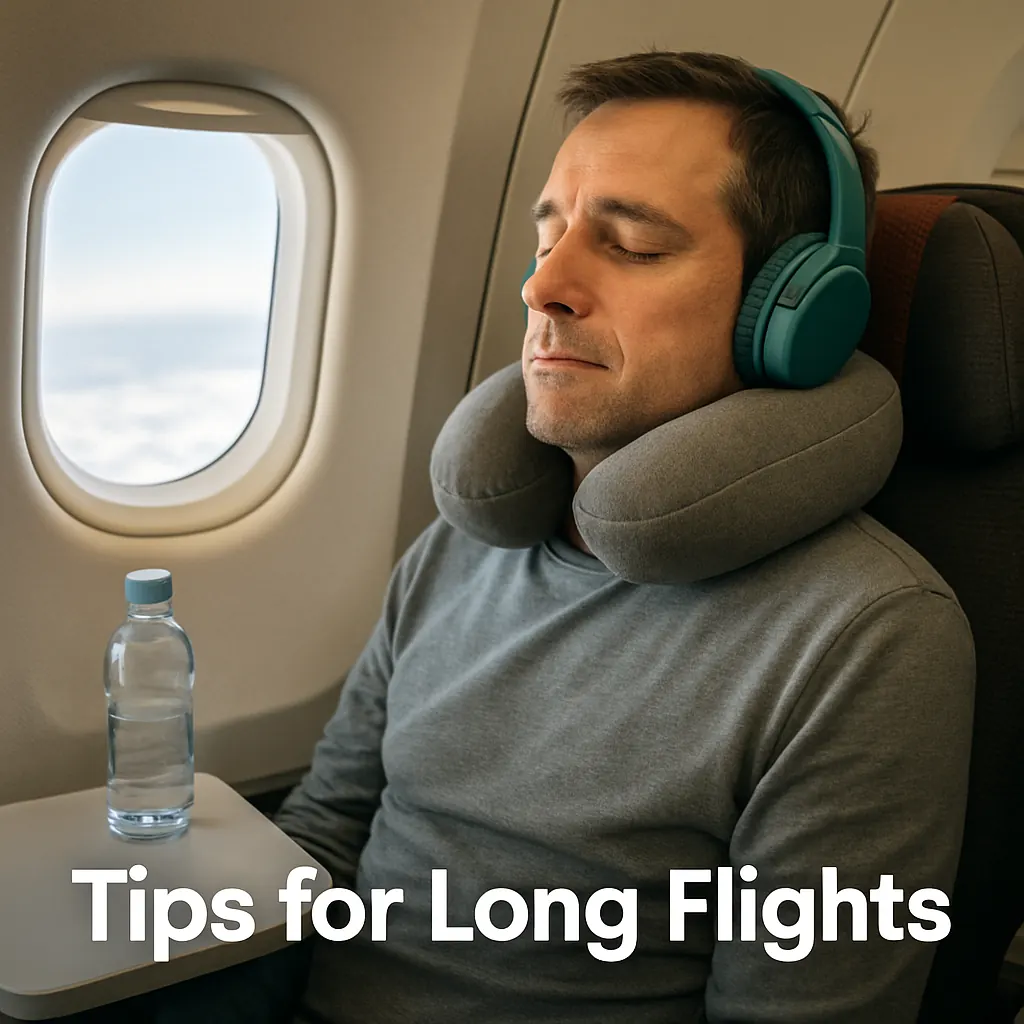
Perfect sleep at 35,000 feet is rare. Aim for decent rest. Two tools matter most: an eye mask that blocks light and earplugs that calm the drone. Add a neck pillow that supports under the chin so the head does not wobble forward. Set your phone to night mode. Lower screen brightness. Queue a long ambient playlist or a boring audiobook. I once zoned out to a rain track for three hours and woke up with a tiny line of drool and zero shame. It worked.
Move often and stretch without drama
Every ninety minutes, stand for two or three minutes. Roll shoulders. Circle ankles. Calf raises by your seat. If the aisle is clear, take a short walk to the back and back. Movement keeps joints friendly and helps circulation. It also breaks the mental monotony. A little motion feels like a reset button.
Build a mini routine for the first hour
The first hour sets the mood. My routine goes like this:
Stow bag and pull out the seat pocket kit
Wipe armrests and tray
Shoes off, socks on
Choose first movie or queue a playlist
Drink half a bottle of water
Send any last messages while the door stays open, then flight mode
After that, I relax. A clear start makes the rest of the flight feel planned.
Entertainment: mix active and passive
Two movies in a row can feel stale. Create a mix. One episode of a series. A chapter from a travel book. A puzzle game that runs offline. A mindful breathing app for five minutes. Then a movie. The variety helps time move faster. Download everything in advance so weak Wi-Fi does not stress you out.
Temperature, pressure, and ears
Cabin pressure changes. Swallow, yawn, or sip water during climb and descent. Chewing gum helps. For sensitive ears, pressure-reducing earplugs can make a real difference. If your sinuses feel stuffy, a light saline spray before descent reduces the dull ache that some people get.
Jet lag: start before you fly
If you cross many time zones, nudge your schedule by one hour per day for two or three days before departure. During the flight, align meals and screen light to the destination clock. Land in daylight and get natural sun in your eyes for twenty minutes. Move your body. Nap short if you must. A real sleep at local night seals the reset.
Food timing beats food size
Big meals can hit hard in a seated position. Smaller portions over time feel better. If the airline meal service arrives at an odd hour for your destination, save part of it for later. Plain crackers plus water during descent can settle a fussy stomach.
Hygiene without a full sink
A quick refresh kit works wonders near landing:
Toothbrush and a travel paste
Face wipe or a splash of water in the lavatory
Deodorant
A small moisturizer
Five minutes in the lav and you walk out feeling human again. It changes your mood for the rest of the day.
Tech tips that save nerves
Noise-canceling headphones reduce cabin roar and lower fatigue
A long USB-A to USB-C cable reaches awkward outlets
Airplane mode with Bluetooth on keeps battery sane
A compact power bank covers seats with dead ports
Offline maps and translation packs help right after landing
Mindset: accept the tube and design micro-joy
Long flights feel easier when you stop fighting the hours and design tiny joys. A favorite candy you only eat in the air. A classic film you rewatch each year. A small journal for trip notes. I still smile when I find an old boarding pass tucked inside a notebook. Travel gives small artifacts like that. Lean in.
If you fly with kids
Pack a surprise toy that appears mid-flight. Preload shows that match the child’s age. Use a spill-proof cup. Snacks every hour help with mood and pressure. Many parents fear side eye from other passengers. Most people understand. A calm parent and a flexible plan go a long way.
Health basics worth repeating
If your doctor recommends compression socks, bring them. If you have a condition that requires medication on a schedule, set alarms to match destination time and keep pills in your personal item. Stand and stretch. Drink water. If anything feels off, speak to the crew early. They have seen most things and they care.
A simple checklist for the night before
Download entertainment and music
Charge all devices and the power bank
Check seat assignment and meals
Pack the seat pocket kit
Fill a bottle after security
Wear layers and easy shoes
Take a photo of your documents
Set two alarms
This list lives on my phone. I tap through it in five minutes and my brain relaxes.
Long flights will always be long. That part does not change. What changes is how you feel through the hours. A small kit in the seat pocket. Clothes that breathe. Water at arm’s reach. A short walk now and then. A plan for sleep that does not chase perfection. Stack these tiny wins and the journey turns from a chore into a quiet pocket of time. Sometimes I even start to enjoy the calm, the hum, the strange peace of being between places with nowhere else to be.
You may also like:
Comments