



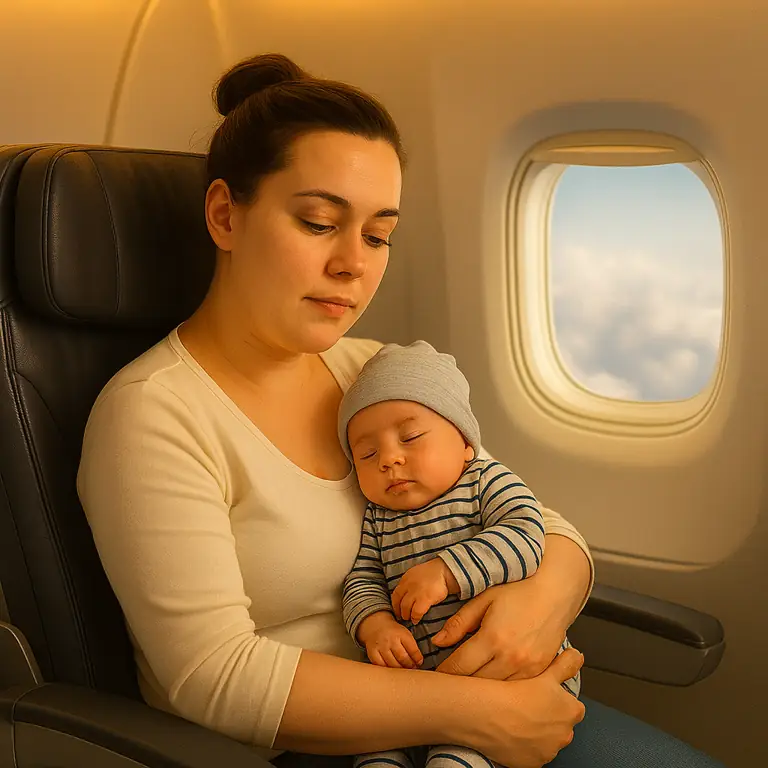
I remember my first long flight with our tiny human. A baby wrap across my chest, boarding pass between teeth and that strange mix of excitement plus “what if the cabin pressure wakes the dragon.” The gate agent smiled, I smiled back and we survived with fewer tears than expected. After a few more trips short hops and overnight hauls these are the tips I wish someone whispered to me at 2 a.m. while I packed snacks and spare onesies. This guide keeps it simple, friendly and honest. No magic. Just practical ways to make air travel with an infant smooth enough that you can still enjoy the window views.
Quick snapshot
Start early with planning. Seats, bassinet, and a basic packing list.
Keep baby warm, fed and comfy. That wins half the battle.
Think layers, zip bags and small backups for everything.
Accept that some moments get messy. Calm always spreads to baby.
Booking basics that actually help
Pick flight times that match nap rhythm. Midday flights worked best for us. Early mornings were fine too. Red eye can be gold if your infant sleeps well in motion. If your child fights night sleep, skip the red eye.
Choose seats with a mission. Bulkhead rows often host bassinets on long haul routes. Ask the airline right after purchase. If bulkhead is gone, aim for a window so you control light and have a wall for a little privacy. Aisle is handy for quick walks. If traveling with two adults, window + aisle across the same row can be smart on planes with a 3-3 layout, since some middle seats stay empty.
Add extra time at the airport. Security with baby gear takes longer. Extra time can be the difference between calm and chaos.
Gear that makes life easier
Carrier and stroller. I like having both. The carrier wins at security and during boarding. The stroller wins during long connections and when your shoulders need a break. Gate check the stroller. Tag it early and fold it at the aircraft door.
Diaper kit in a small pouch. Load 6–10 diapers for a medium travel day, wipes, rash cream, disposable bags, and a foldable pad. Keep this kit in the seat pocket or under the seat so you never fight the overhead bin mid-turbulence.
Feeding tools. For formula, pre measure into small containers or travel pods. For milk or baby food, keep everything in one clear pouch for screening. For breastfed babies, a roomy scarf or cover can help if you prefer privacy.
Sound helpers. A small white noise app on your phone or a lightweight machine can smooth out cabin rumbles and nearby chatter.
Extra outfits for both of you. Blowouts and spills pick random moments. Pack a spare shirt for the adult, plus two onesies for baby, folded in zip bags so clean swaps are fast.
Blanket and layers. Cabins swing cool to warm. A soft muslin plus a light sweater handles most flights. Socks help tiny feet stay warm.
Airport flow without stress
Security screening with baby food and liquids. Rules allow extra screening for baby items. Keep them together in a clear pouch. Place them in a tray and flag the officer with a simple line: “Baby liquids.” It saves confusion. Keep your calm tone. That sets the pace.
Board early or board last. Early boarding gives you time to set up your nest. Boarding last keeps baby out of the cabin noise for a few more minutes. Pick the style that fits your infant’s mood that day.
Pre-takeoff checklist. Buckle baby, clip a pacifier or teether, open a clean burp cloth, pull out one quiet toy, and keep a bottle or breast ready within reach for takeoff.
Ears, pressure and fussing
During climb and descent, sucking helps equalize pressure. Offer breast, bottle, or pacifier a few minutes before rotation and again when the plane starts down from cruise. Yawns help too. Gentle rubs near the ear and jaw line can ease the feeling. If baby sleeps during descent, let sleep continue if they look settled.
Feeding in the air
Try smaller, more frequent feeds. Plan for little top ups during long flights.
Warm milk is nice, yet room temperature saves time. Cabin crew can help with warm water if needed.
Hydration matters for adults too. Drink water each hour. A calm parent is a better parent at 35,000 feet.
Sleep strategy that works more often than not
Babies notice parent energy. Slow your breathing. Dim the light by closing the window shade. White noise on low volume. A light sway in the aisle if the seatbelt sign allows. I sometimes paced the galley with a quiet rhythm and the crew said “take your time.” That six-minute walk fixed a meltdown more than once.
Diaper changes without drama
Airplane restrooms feel tiny yet they have a flip down changer on many cabins. Bring only the diaper kit not the whole bag. Use a disposable bag for each used diaper to keep smells under control. If the seatbelt sign is on and you face a wet diaper, a quick change in your seat under a blanket can work, but only if the cabin is calm and your neighbors are fine with it. For a messy diaper use the restroom once allowed.
You may also Like:
Flight with Infant Tips and Packing Checklist
Entertainment for short attention spans
New textures and simple toys beat loud gadgets. Crinkle paper, soft cloth books, a teether with different surfaces. Singing works better than you think. My silly whisper songs saved us in row 18 on a stormy day. I am not proud of the lyrics. They worked.
Clothes, layers, and spills
Dress baby in layers that zip or snap fast. Avoid complicated outfits. A one piece zip suit plus a cardigan covers most cabin temps. Pack two spare bibs and extra burp cloths. Choose dark shirts for the adult if you want to hide milk specks in photos later.
Paperwork and health bits
Carry passports, birth certificate or family book if your airline asks and any consent letters for solo parent travel. Add a basic med kit for fever and gas relief plus saline drops and a small nasal aspirator. Ask your pediatrician for green-light advice if baby is preterm or had a recent ear infection. A short checklist on paper helps when your brain feels foggy.
The bassinet question
Many long haul planes have bassinets that attach at bulkhead seats. Weight and length limits apply. Request it right after booking, confirm again 48 hours before and again at the gate. Bring a backup plan in case you get a different aircraft. A compact travel pillow under your forearm can support baby for contact naps when the bassinet is not available.
After landing
Hold back a minute if the aisle is jammed. Gather tiny socks, bottle caps, toys and wipe the seat area so you do not leave anything behind. Use the carrier for the walk to immigration. Babies often fall asleep right here. That is your golden five minutes. Breathe.
My short personal take
I used to love chasing perfect travel plans. Then I flew across the Atlantic with an infant and realized calm beats perfect. The flight with the smoothest naps was the one where I slowed down, smiled at the crew and accepted the small mess. The city coffee on arrival tasted better than any latte I had at home. Little wins matter. Air travel with a baby feels big, yet it is totally possible and sometimes even sweet.
Packing list you can copy
Passports, tickets, consent letters if needed
Diaper kit: 8–10 diapers, wipes, cream, foldable pad, bags
Feeding: formula pods or milk, bottles, cleaning wipes, burp cloths
Clothing: 2 spare onesies, socks, cardigan, soft hat
Comfort: pacifier, clip, small blanket, two quiet toys, crinkle cloth
Health: saline, bulb aspirator, fever reducer as advised, thermometer
Gear: carrier, compact stroller for gate check, zip bags, white-noise helper
For the adult: spare shirt, light snack, water bottle
Final friendly nudge
Travel with a baby looks big on paper, yet real trips feel more normal each time. Plan the basics. Pack light backups. Keep your voice soft when the cabin gets loud. On arrival, celebrate with a snack and a photo. Your infant will not remember the flight, yet you will remember that first brave trip forever. And yes, the sunrise from seat 17A still looks beautiful with a burp cloth on your shoulder.
You may also Like:
Tips for Air Travel with Infant: Advice from Takeoff to Landing
FAQs — quick answers for busy parents
How early can an infant fly?
How many diapers for a travel day?
Bassinet on planes, how to get one?
What helps with ear pressure?
Carrier or stroller?
Can I bring formula or milk through security?
What seat should I pick with an infant?
What if my infant cries a lot on board?
Comments