



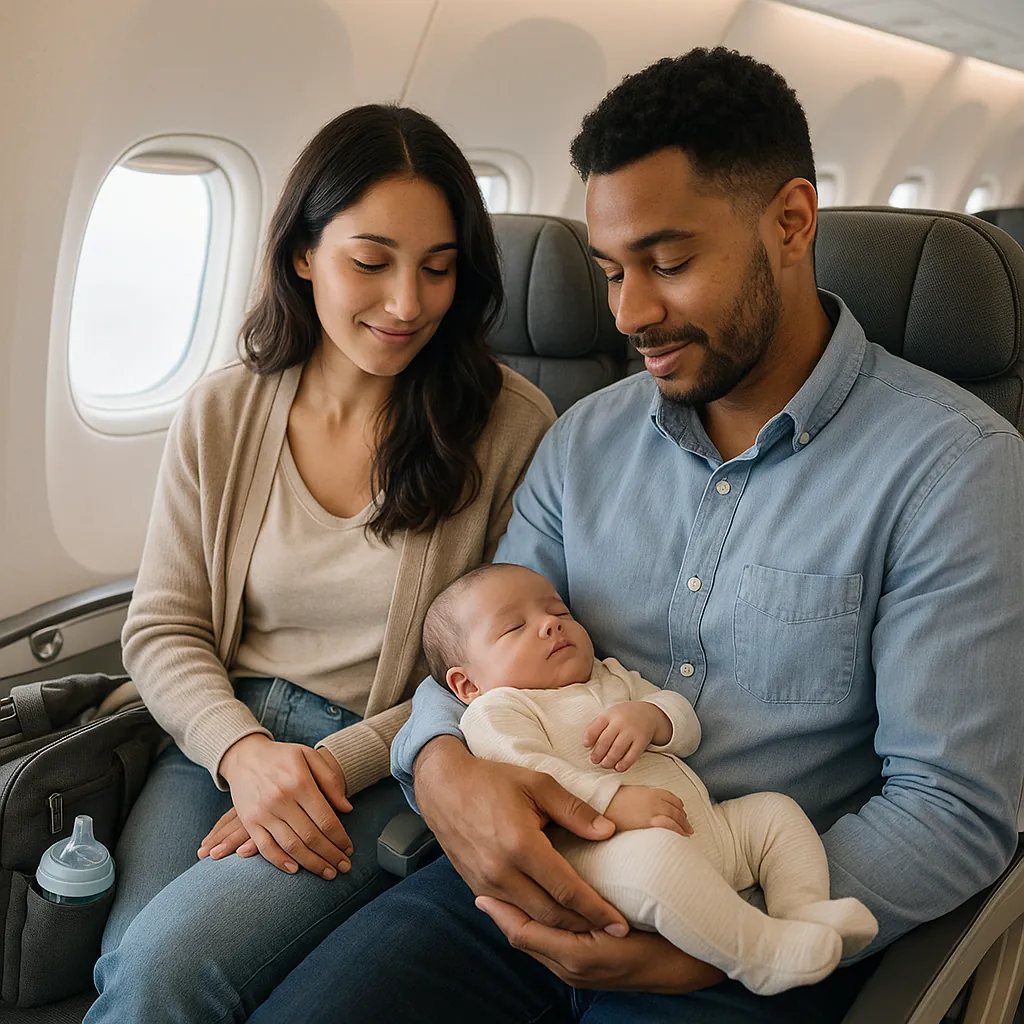
I still remember our first flight with our tiny human. Barcelona to Istanbul. Early morning slot. I packed three lists. Then I packed one more for luck. We reached the gate and the stroller clip refused to fold. For fifteen seconds my life became a wrestling match with aluminum. A kind flight attendant gave me a smile that said, “we have all been there.” That moment changed my whole approach. Flying with a newborn can feel like a puzzle, yet it becomes lighter when you break it into small steps. This guide is that napkin of steps.
Quick idea that lowers stress
Think in zones: home prep, airport dance, on-board rhythm, landing reset. Small wins in each zone add up to a calm day.
Home prep (the night before)
1) Pack five little kits.
Instead of one big diaper bag, build mini pouches:
Feeding kit: bottles, pre-measured formula or nursing cover, burp cloth, two bibs.
Change kit: 8–10 diapers for a travel day, wipes, diaper cream, disposable bags, a foldable pad.
Comfort kit: swaddle or sleep sack, soft blanket, pacifiers, a tiny rattle.
Health kit: saline drops, bulb syringe, baby acetaminophen (if your doctor already said it is fine), a small thermometer.
Parent kit: snacks, water, charger, spare shirt. Yes for you. Milk happens.
2) Documents and seats.
Add baby to the booking as infant in arms or with seat. If you want a bassinet, ask the airline as early as possible. Most long-haul cabins place bassinets at bulkhead rows. Availability is limited. Early ask helps.
3) Milk plan.
Formula and breast milk pass security in reasonable quantities. Keep them in a clear pouch. Tell the officer in a calm voice that this is baby food. International rules vary a little by country, so checking your departure airport page helps.
4) Clothes layer rule.
Dress baby in one more layer than you, plus socks and a hat in winter. Cabins can feel cool. Zipper onesies make changes faster than snaps.
Airport dance (arrive with margin, move like a team)
1) Get there a bit early, not crazy early.
Aim for a smooth pace, not a long lounge day. Too much waiting can make baby fussy. Two hours for short haul. Three for long haul. Choose calm over rush.
2) Stroller vs carrier.
Use both if you can. Carrier shines at security and boarding. Stroller saves your back during long walks. Gate-check the stroller at the jet bridge. Ask for a big gate tag so ground crew can spot it fast on arrival.
3) Security tips for liquids.
Keep milk and baby food in a separate pouch. Place it in a bin first so officers see it early. Smile. A simple “infant milk” sentence clears most confusion.
4) Pre-board is not showtime, it is setup time.
Accept pre-boarding. Use those minutes to wipe armrests and table with baby-safe wipes, place a burp cloth on your shoulder, and set the change kit within hand reach.
On-board rhythm (how to keep the cabin calm)
1) Takeoff and landing ear comfort.
Offer breast, bottle, or pacifier during climb and descent. Sucking helps equalize ears. Begin a few minutes before wheels lift and again when the captain says initial descent. Gentle rocking helps too.
2) Bassinet basics.
If you got a bassinet seat, crew will install it after takeoff. Most bassinets have a weight and length limit. Bring a light muslin to line it. Keep your seat belt on and hands near during turbulence.
3) Feed on cues, not on schedule.
Cabin noise, new smells, and pressure can shift hunger cues. Shorter, more frequent feeds often work better in the air. Burp a bit more than usual.
4) Changing strategy.
Many plane lavatories have a fold-down table. It is narrow, yet it works. Take only the change kit. No full bag. If the seat belt sign stays on for long, improvise with the changing pad on your seat and ask crew for help; they will guide you.
5) Sleep support.
Dim the overhead light when baby starts rubbing eyes. Swaddle or zip the sleep sack. White noise apps work, yet the aircraft hum already helps a lot. A hand on baby’s chest for one minute can settle little startles.
6) Crying happens.
You are not doing it wrong. Newborns cry. Calm breath. A slow sway in the galley area helps if the seat belt sign is off. Most passengers feel empathy for tiny travelers.
7) Hydration and snacks for you.
Parent fuel matters. Sip water often. Take easy snacks you can open with one hand. That small energy keeps your tone relaxed.
Special seats and gear (what actually helps)
Bulkhead with bassinet: best for long haul infants if you prefer a flat space to nap. Legroom is generous for the parent too.
Window seat: quiet corner, fewer bumps from carts.
Aisle seat: faster exit for changing or rocking.
Car seat on board: if you purchased a seat for baby, many FAA/EASA-approved car seats can be used. Check your model and the airline policy. Bring the label photo on your phone to show crew.
Light stroller frame: airport life becomes easier with compact fold models.
Carrier with head support: game changer for boarding and deplaning.
You may also Like:
Flying with a Newborn Tips and Checklist for Stress-Free Travel
Tips for Traveling with Infant on Airplane
Tiny health notes (always follow your pediatrician)
Many airlines allow newborns after a short period from birth. One to two weeks is common, yet medical advice matters more than any blog line. If birth had complications or baby arrived early, ask your doctor before booking. Air cabins are pressurized, yet they are still dry. Offer more milk than a strict home schedule. Watch diapers and energy level.
Jet lag with a newborn (keep it gentle)
Babies are little clocks. A trip moves the sun on them. For trips under three days, stick close to home time when possible. For longer trips, shift slowly:
Day one: naps in the stroller, lots of daylight.
Day two: start bedtime thirty minutes closer to local time.
Day three: another small step.
Keep nights dark and quiet. Early morning sunlight helps reset.
A simple travel day timeline (sample)
T-3 hours: leave home. Baby fed and changed.
T-2 hours: arrive at airport. Check bags. Request stroller gate tag.
T-90 min: security with milk pouch ready.
T-60 min: quick lap with the stroller. Short feed.
T-30 min: pre-board. Wipe seat area. Change diaper.
Takeoff: offer pacifier or feed.
Cruise: nap in bassinet or on your chest. Hydrate, snack, breathe.
Descent: offer pacifier or feed again.
Arrival: wait a minute for stroller at the jet bridge. Fresh diaper before passport control.
Packing checklist you can copy
Passport or ID for baby (plus a copy).
Birth certificate if the airline requires it for age proof.
8–10 diapers, wipes, cream, foldable pad, disposable bags.
2–3 changes of clothes for baby, one spare shirt for you.
Bottles, pre-measured formula or nursing cover, burp cloths.
Pacifiers, two extras.
Small blanket, swaddle or sleep sack.
Saline drops, syringe, baby acetaminophen (if doctor approved), thermometer.
Hand sanitizer, baby-safe surface wipes.
Light toys: rattle, soft book.
Carrier, compact stroller, car seat if using a seat.
Chargers, power bank, downloaded white noise.
Snacks and water for parents.
Real talk about other passengers
Most people smile at tiny travelers. A few might sigh. That is fine. You are doing your best. A quick line like “first flight day, thanks for patience” melts many hearts. Share a spare ear plug if someone looks tense near you. Micro kindness goes a long way on a metal tube in the sky.
When plans change
Flights delay. Gates switch. Babies choose new feed times. Flex mode helps. Aim for the next small good step: a clean diaper, a sip of water, a gentle pat. That is success, not perfection.
Final little pep talk
You can do this. Flying with a newborn is not a test of perfect parenting. It is a travel day with a small co-pilot who speaks by wiggling and yawning. Set up your kits. Ask for the bassinet early. Offer a pacifier at takeoff and descent. Drink water. Smile at the crew. And when the wheels touch down and you roll the stroller off the jet bridge, take a second. You just made a tiny first trip happen. That is big.
Comments